

1X Technologies: Betting on Safe, Data-Driven Androids for the Home
4 min read
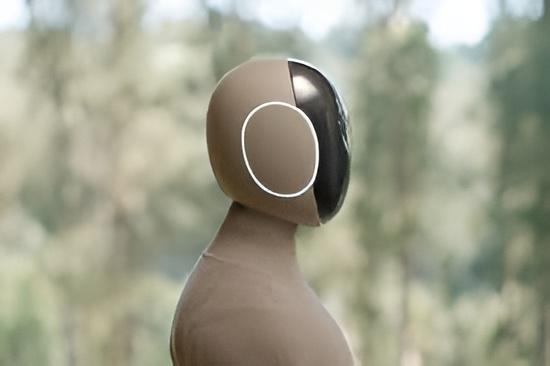
Table of Contents
1X Technologies: Comprehensive Company Analysis
1X Technologies: Building the Future of Humanoid Robotics
Company Overview and Mission
1X Technologies is developing humanoid robots with an emphasis on safe operation, practical functionality and real-world deployment. Founded in 2014 in Oslo by Bernt Øivind Børnich as Halodi Robotics, the company originally focused on building compliant actuator systems intended for close human interaction. This engineering approach — prioritizing controlled strength, efficiency and predictable movement — continues to guide the company's robotics philosophy.
Invest in top private AI companies before IPO, via a Swiss platform:
Invest in AI Unicorns - OpenAI, Anthropic & More | Smartprofit Finder AG
Own a piece of OpenAI, Anthropic & the companies changing the world. Swiss-regulated investment platform. Start with just $10,000.
 Smartprofit Finder AG
The firm’s stated mission is to produce general-purpose androids that can support labor-intensive environments and, in future stages, assist in domestic settings. Rather than pursuing high-speed acrobatics or experimental prototypes, 1X positions its development roadmap around technologies that can function reliably in typical human environments. The transition from Halodi to 1X reflects the firm’s evolution from a component-centric robotics developer to a full-system android manufacturer.
Product Portfolio and Core Technologies
1X’s two flagship robots — EVE and NEO — represent sequential stages of its long-term strategy.
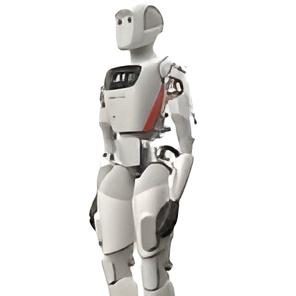
EVE, a wheeled humanoid system, was designed to enable early commercial deployment. This configuration avoids the challenges of bipedal balance, enabling EVE to perform tasks such as routine patrols and facility support while collecting real-world interaction data. These deployments provide training material for the company's AI systems.
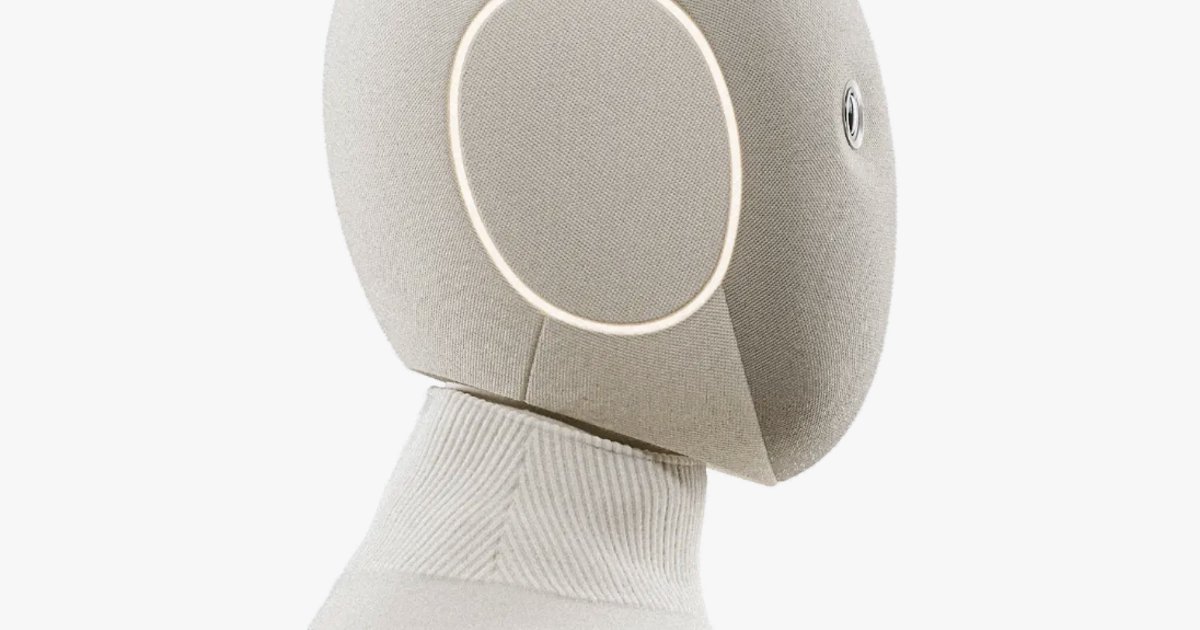
NEO, a lightweight bipedal android, is the company’s next developmental step. Designed for home and general-purpose environments, NEO features a soft, compliant body structure and weighs roughly 30 kilograms. The design prioritizes safe operation around people, pets and household objects.
Underlying both robots is the company’s proprietary Revo1 actuator, a high torque-to-weight motor used within a tendon-based mechanism intended to mimic human muscle movement. This approach supports controlled force and compliant interaction while maintaining lifting capability.
On the AI side, 1X is developing Redwood, its Vision-Language-Action model. Redwood integrates perception, instruction understanding and action planning, and is trained partly on data generated by EVE deployments. When paired with NEO, Redwood is intended to support navigation, basic tasks and environmental interpretation.
Leadership Philosophy and Strategic Direction
CEO Bernt Øivind Børnich leads the company with a focus on long-term development, emphasizing incremental capability building and safety. His stated view is that humanoid robots must develop practical skills through continuous exposure to human environments.
Under this philosophy, 1X follows a stepwise roadmap:
- deploy a wheeled robot (EVE) to gather extensive operational data,
- use that data to train models,
- apply those models to NEO as its functionality evolves.
This staged pathway reflects a strategy designed to reduce risk and increase real-world understanding before full-scale bipedal deployment. The emphasis on compliant hardware, controlled strength and predictable motion aligns with the company's focus on safe human-robot interaction.
Market Position and Competitive Strategy
1X competes in a fast-growing humanoid robotics sector that includes companies developing robots for industrial settings, logistics centers and automotive manufacturing. Unlike competitors prioritizing structured industrial environments, 1X is focusing on domestic and service-oriented contexts, which involve higher variability and require adaptive safety mechanisms.
The firm’s market strategy features two key components:
- Data-first deployment
EVE units deployed in commercial environments generate real-world data that supports training of both Redwood and operational behaviors. - Domestic-first positioning for NEO
NEO is designed for environments that are less predictable than factories, requiring compliant mechanics and advanced perception.
This differentiation places 1X in a niche where solving safety, reliability and adaptability is essential for widespread residential adoption. Pre-orders for NEO position early adopters as contributors to the robot's developmental stage, creating a user feedback loop that supports ongoing refinement.
Financial Foundation and Business Model
1X has secured more than $123 million across several funding rounds, with investors including the OpenAI Startup Fund, Tiger Global and Samsung NEXT. This financial support enables the company to advance hardware development, AI model training and real-world deployment programs.
The firm's business model begins with revenue from EVE deployments, where robots perform tasks in operational environments while simultaneously collecting data valuable for NEO's long-term development.
For NEO, 1X uses a subscription-based model supplemented by pre-order commitments. Early customers gain access to evolving capabilities, while the company benefits from recurring revenue and large-scale user data that inform capability improvements.
Challenges for market expansion include demonstrating reliability in complex home environments, ensuring user trust in safety mechanisms, and pacing capability development to align with customer expectations. The company’s emphasis on compliant hardware and controlled interaction is intended to address these areas as its androids progress toward broader commercial availability.
1X Review: Androids, AI, and Reality Check | RoboHorizon Robot Magazine - AI you can touch
A comprehensive look at 1X, the OpenAI-backed firm creating humanoid robots like EVE and NEO. Can they truly bring androids into our daily lives?
 Robot King