

$40 Billion Hype or Breakthrough? Inside Figure AI’s High-Stakes Robot Bet
4 min read
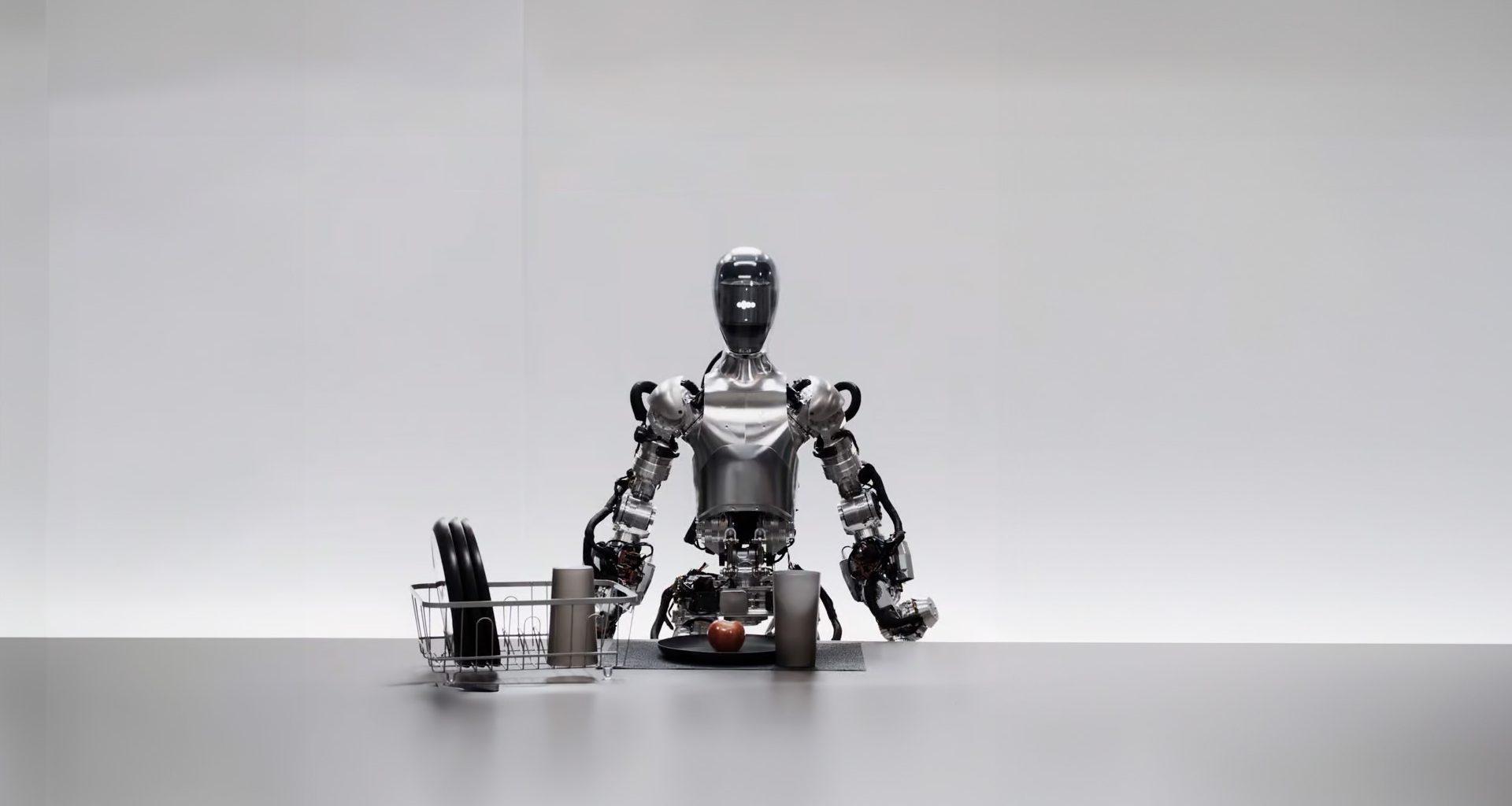
Table of Contents
Figure AI's $39.5 Billion Valuation: How a Robot Startup Sparked a Funding Frenzy
Figure AI has emerged as one of the most closely watched private robotics startups in Silicon Valley after reports that it is seeking new funding at a valuation of approximately $39.5 billion. Founded just three years ago, the company now ranks among the most valuable private technology firms in the United States, despite having limited commercial deployments and no reported recurring revenue.
Invest in top private AI companies before IPO, via a Swiss platform:
Swiss Securities | Invest in Pre-IPO AI Companies
Own a piece of OpenAI, Anthropic & the companies changing the world. Swiss-regulated investment platform for qualified investors. Access pre-IPO AI shares through Swiss ISIN certificates.
 SmartProfit Finder AG
The company’s stated ambition is to deploy more than 200,000 humanoid robots across factories, warehouses, and eventually homes by 2029. These robots are designed to operate autonomously in structured physical environments, performing tasks such as object manipulation, navigation, and repetitive industrial work. If achieved, this scale would represent a major milestone in the commercialization of humanoid robotics.
At the same time, the gap between current operations and long-term projections has drawn close scrutiny from investors and industry observers, making Figure AI a focal point in broader discussions about valuation discipline in emerging AI-driven industries.
The Founder Behind the Vision
Figure AI was founded by Brett Adcock, an entrepreneur with experience spanning both software and hardware ventures. After graduating from the University of Florida in 2008, Adcock co-founded Vettery, a hiring marketplace that was acquired in 2018. He later co-founded Archer Aviation, an electric vertical takeoff and landing (eVTOL) company that went public through a SPAC merger in 2021.
Following his departure from Archer, Adcock launched Figure AI in 2022, focusing on humanoid robotics as the next frontier of artificial intelligence and automation. Former employees describe a leadership style characterized by deep personal involvement in both technical development and capital raising, with early progress moving quickly from conceptual design to functional prototypes.
By 2023, Figure had unveiled its first humanoid robot, positioning itself among a growing group of companies attempting to translate advances in AI perception and control into general-purpose physical machines.
The BMW Partnership Reality
A central element of Figure AI’s public narrative is its partnership with BMW, highlighted through videos showing humanoid robots operating inside BMW’s manufacturing facilities in South Carolina. These demonstrations have been widely circulated as evidence of real-world industrial adoption.
However, the scope of the deployment remains limited. Initial testing reportedly involved a small number of robots—at times only one operating at once—primarily during nonproduction hours. Tasks focused on basic object handling and movement rather than integration into high-speed assembly workflows.
BMW has since confirmed that additional robots are being evaluated in both nonproduction and selected live-production environments. Even so, the partnership remains in an experimental phase, aimed at assessing feasibility rather than indicating full-scale operational deployment.
Investment Frenzy and Market Dynamics
Figure AI previously raised capital in early 2024 at a valuation of approximately $2.6 billion, attracting high-profile investors including Microsoft, Nvidia, OpenAI, and investment vehicles associated with Jeff Bezos. That round helped establish the company as a prominent player in humanoid robotics and contributed to growing interest from institutional and private investors.
More recently, demand for access to Figure AI shares has intensified through secondary markets and special-purpose vehicles (SPVs), allowing smaller investors to participate in private funding rounds. Promotional materials emphasize strong interest and limited availability, reinforcing a perception of scarcity around the company’s equity.
This surge in investor attention reflects broader enthusiasm for AI-driven hardware platforms, particularly humanoid robots, which are increasingly viewed as a potential extension of large language models into the physical world.
Information and Transparency Concerns
Despite the elevated valuation discussions, Figure AI’s disclosures remain limited. Investor presentations typically include demonstration videos and high-level projections but do not provide audited financial statements or detailed revenue breakdowns.
The company has indicated that it currently generates little to no revenue, while projecting significant future sales tied to large-scale robot deployment by the end of the decade. Achieving such scale would require overcoming substantial challenges in manufacturing, supply chains, cost reduction, and long-term reliability—areas where robotics historically progresses more slowly than software.
Valuation comparisons have occasionally been drawn to Tesla’s humanoid robotics initiatives, though such parallels remain largely theoretical given the differing stages of development and commercialization.
Technical Capabilities and Limitations
Figure AI’s robots have demonstrated controlled task execution, including object grasping, lifting, and basic navigation in structured environments. These capabilities represent meaningful technical progress but remain far from the flexibility and adaptability required for general-purpose labor.
Following the end of its collaboration with OpenAI, Figure has stated that it is developing its own end-to-end robotic AI stack, encompassing perception, planning, and control. Public technical validation of these claims remains limited, and detailed benchmarks or third-party evaluations have not yet been released.
As with many humanoid robotics efforts, key challenges persist around dexterity, safety, reliability, and sustained autonomous operation in unpredictable real-world settings.
Market Implications and Bubble Concerns
Figure AI’s funding efforts illustrate broader dynamics in AI-related markets, where expectations around transformative potential can drive valuations well ahead of near-term fundamentals. The combination of ambitious projections, limited financial transparency, and strong investor demand has prompted comparisons to earlier speculative cycles in emerging technologies.
Whether Figure AI ultimately proves to be a foundational player in humanoid robotics or an example of valuation excess will depend on its ability to translate technical demonstrations into scalable, economically viable products. The company’s progress over the next several years—particularly in moving from pilot programs to revenue-generating deployments—will be critical in resolving that question.
For now, Figure AI stands at the intersection of technological promise and market skepticism, embodying both the potential and the risks inherent in betting on the next major platform shift in artificial intelligence and automation.