

Harmattan AI Hits $1.4bn Valuation as Dassault-Backed $200m Round Accelerates Combat Autonomy and EW Systems
4 min read

Table of Contents
Harmattan AI: Transforming Defence Technology Through Strategic Partnerships
Harmattan AI: Transforming Defence Technology Through Strategic Partnerships
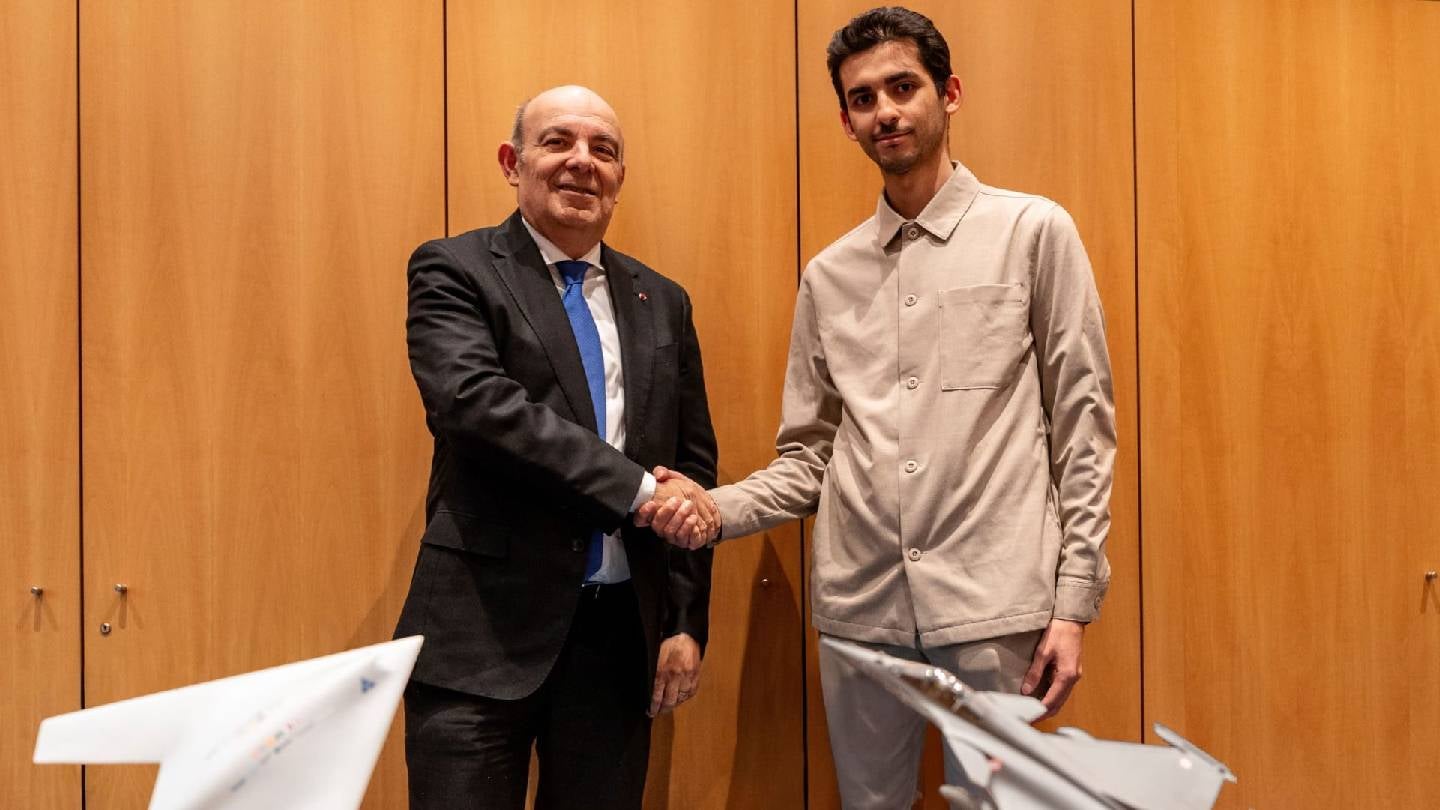
Harmattan AI has rapidly established itself as a notable player in the defence technology sector, reaching a valuation of $1.4 billion following a $200 million Series B funding round. The milestone places the company among a small group of defence-focused startups to achieve unicorn status within a short operating history since its founding in 2024. The funding round, led by Dassault Aviation, signals not only financial backing but also a strategic alignment around the development and deployment of AI-enabled defence systems.
Invest in top private AI companies before IPO, via a Swiss platform:
Swiss Securities | Invest in Pre-IPO AI Companies
Own a piece of OpenAI, Anthropic & the companies changing the world. Swiss-regulated investment platform for qualified investors. Access pre-IPO AI shares through Swiss ISIN certificates.
 SmartProfit Finder AG
Strategic Partnership and Market Position
The partnership between Harmattan AI and Dassault Aviation reflects a growing shift in combat aviation toward deeper integration of artificial intelligence. Dassault, the manufacturer of the Rafale fighter jet, is positioning Harmattan AI’s controlled-autonomy systems as part of future combat aircraft and uncrewed platforms. The collaboration focuses on embedding AI capabilities into next-generation programs such as the Rafale F5 and associated uncrewed aerial systems, with the aim of improving decision support, situational awareness, and operational coordination.
The concept of controlled autonomy underpins this approach. Rather than fully autonomous weapons, the systems are designed to execute complex tasks independently while remaining under human supervision. In this model, AI functions as an assistive and analytical layer, processing large volumes of battlefield data and offering tactical recommendations, while final authority remains with human operators.
AI-Enabled Defence Platform Expansion
Harmattan AI’s technology portfolio spans several defence domains, including air defence, intelligence, surveillance and reconnaissance (ISR), strike-capable unmanned systems, electronic warfare, and command-and-control platforms. The company positions AI as the central integration layer across these systems, enabling faster data fusion, threat assessment, and response coordination compared with traditional rule-based architectures.
In air-defence applications, Harmattan AI’s software aggregates radar, sensor, and intelligence inputs into a unified operational picture. This allows for earlier threat detection and more efficient prioritisation of responses, particularly in environments involving multiple simultaneous threats. The approach is intended to reduce operator workload while improving reaction times in complex airspace scenarios.
Advanced UAV and Drone Technology
Harmattan AI’s ISR and strike UAV platforms illustrate how controlled autonomy is being applied in operational contexts. These systems are designed to conduct patrols, adapt to evolving tactical conditions, coordinate with manned aircraft, and maintain persistent surveillance within defined parameters. AI enables these platforms to operate with greater independence while remaining integrated into broader command structures.
The company has also focused on counter-drone capabilities, addressing the growing challenge posed by the widespread use of low-cost unmanned systems in modern conflicts. Its solutions rely on machine-learning models to classify drone signatures, anticipate movement patterns, and support automated defensive responses, reducing reliance on manual detection and engagement processes.
Electronic Warfare and Command Integration
Electronic warfare is another core area of Harmattan AI’s development efforts. In this domain, AI systems are used to analyse activity across the electromagnetic spectrum, identify hostile signals, and adapt countermeasures dynamically. Automation allows these systems to respond more quickly to changes in adversary tactics, though they remain subject to human oversight and operational constraints.
The company’s command-and-control platforms serve as the integrating layer across air, electronic, and unmanned systems. These platforms aggregate inputs from sensors, aircraft, drones, and ground assets, translating large volumes of data into structured information intended to support faster and more informed command decisions.
Future Combat Aviation Integration
The collaboration with Dassault Aviation represents a pathway for these technologies to be incorporated into future combat aircraft architectures. In programs such as the Rafale F5, Harmattan AI’s systems are intended to function as embedded components rather than add-on modules, supporting networked operations involving manned and unmanned assets.
This approach aligns with broader trends in combat aviation toward distributed operations, where a single piloted aircraft may coordinate multiple specialised unmanned platforms. AI systems assist with task allocation, information sharing, and synchronisation across the network, while human operators retain strategic control.
Industrial Scale Production and Deployment
The recent funding round supports Harmattan AI’s transition from development and testing into industrial-scale production. The company plans to accelerate deployment of its ISR, counter-drone, and electronic-warfare systems across operational environments, moving beyond prototype and pilot phases.
From Dassault Aviation’s perspective, the partnership provides access to advanced AI capabilities without relying solely on traditional internal development cycles. This model allows for faster integration of emerging technologies while maintaining oversight of critical defence systems and preserving industrial and technological autonomy.
Conclusion
Harmattan AI’s rise to a $1.4 billion valuation reflects increasing demand for AI-enabled capabilities within modern defence systems. Through a combination of autonomous-systems development and strategic partnerships, particularly with Dassault Aviation, the company is positioning itself within the evolving landscape of AI-supported military operations. While many of these technologies are still progressing from limited deployment toward broader operational use, their continued development highlights the growing role of artificial intelligence in shaping future defence architectures focused on speed, coordination, and data-driven decision-making.
Harmattan AI reaches $1.4bn valuation with $200m round
Harmattan AI has raised $200m in Series B funding, led by Dassault Aviation, bringing the company’s valuation to $1.4bn.
 Jangoulun Singsit