

Humanoid Robot Arms Race: China and the U.S. Battle to Build the Ultimate AI Worker
3 min read
Table of Contents
The Global Race for Intelligent Humanoid Robots
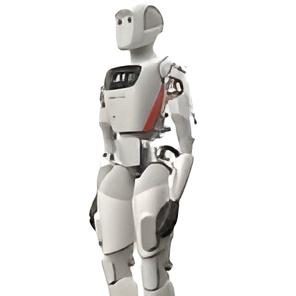
The global technology sector is entering an increasingly competitive phase as the United States and China accelerate efforts to develop commercially viable humanoid robots. These systems are designed not as experimental prototypes, but as AI-powered machines capable of operating in environments built for humans, performing physical tasks in factories, warehouses, and, eventually, private homes.
Invest in top private AI companies before IPO, via a Swiss platform:
Swiss Securities | Invest in Pre-IPO AI Companies
Own a piece of OpenAI, Anthropic & the companies changing the world. Swiss-regulated investment platform for qualified investors. Access pre-IPO AI shares through Swiss ISIN certificates.
 SmartProfit Finder AG
In China, companies such as UBTech have already begun deploying humanoid robots in electric-vehicle manufacturing facilities, where the machines perform basic logistics tasks such as sorting parts and moving containers. While these activities appear routine, they serve a more strategic purpose: generating real-world data for training so-called embodied or physical AI systems. Unlike purely digital models, these systems learn by interacting with the physical environment, adapting to balance, weight, friction, and spatial constraints.
This approach marks a departure from traditional industrial automation. Conventional robotic arms, widely used for decades, excel at repetitive, fixed-location tasks but lack adaptability. Humanoid robots aim to combine advanced robotics with AI systems capable of perception, reasoning, and continuous improvement, enabling machines to respond dynamically to changing conditions.
China has identified humanoid robotics as a strategic growth area, with official plans targeting global leadership by 2027. State-backed investment programs have accelerated development across the sector, allowing companies to test humanoid robots in public demonstrations and controlled industrial deployments. These activities serve both as technical validation and as data collection exercises, feeding machine-learning systems with real operational experience.
Access to large-scale real-world data is increasingly viewed as a structural advantage. Training humanoid robots requires detailed three-dimensional information about how objects move, how surfaces behave, and how balance is maintained under varying conditions. China’s extensive manufacturing base provides frequent opportunities for such data collection, as robots repeatedly perform physical tasks in operational environments rather than simulations.
Despite rapid progress, current humanoid systems remain limited. Public demonstrations often require extensive preparation, and endurance remains a challenge. Robots participating in high-profile events, such as marathon exhibitions, typically require battery changes or full unit replacements. Similarly, several humanoid demonstrations by U.S. companies have relied on partial teleoperation, underscoring the gap between controlled showcases and full autonomy.
Nonetheless, development continues on both sides of the Pacific. In the United States, firms such as Agility Robotics and Figure are testing humanoid systems in logistics and industrial settings, including parcel sorting and cold-storage operations. While performance remains constrained, these deployments provide critical feedback that informs future iterations.
The potential market is substantial. Industry leaders have described humanoid robotics as a possible foundational technology for multiple sectors, including manufacturing, logistics, healthcare, and assisted living. Because humanoid robots are designed to operate in spaces built for humans, they may reduce the need for costly infrastructure redesigns if reliability, safety, and cost targets can be met.
Manufacturing economics will play a decisive role. Analysts frequently draw comparisons to the electric-vehicle industry, where China’s scale enabled rapid cost reductions. While current humanoid robots remain expensive, companies such as UBTech have outlined plans to increase production volumes significantly over the next several years, a move that could materially lower unit costs if executed successfully.
Performance gaps remain. Humanoid robots typically complete tasks far more slowly than humans, although they can operate continuously without fatigue. As AI models incorporate additional real-world data, developers expect efficiency improvements that gradually narrow this gap. Over time, this progression could enable deployment beyond structured industrial environments into more complex settings such as homes.
Beyond individual demonstrations, the broader competition reflects a strategic contest over future industrial platforms. The United States maintains strengths in advanced semiconductor design and core AI software, while China benefits from large-scale manufacturing capacity and extensive physical data collection. The outcome of this race will influence not only robotics markets, but also how physical labor is augmented or automated across global industries.