


Humanoid Robotics Startup Apptronik Triples Valuation to $5.5 Billion on New Funding Round
3 min read
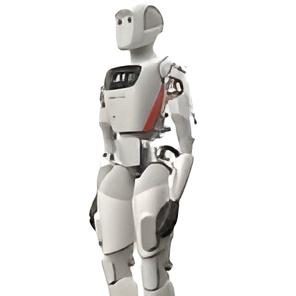
Table of Contents
Apptronik's Humanoid Robot Revolution
Apptronik's Humanoid Robot Revolution: From Factory Floors to Family Homes
Funding Round and a Valuation That Just Tripled
Apptronik has raised approximately $520 million in new capital, increasing its valuation to more than $5.5 billion — roughly three times higher than after its initial Series A round a year earlier. For a private company, such a rapid jump in valuation signals strong investor conviction that humanoid robotics is moving closer to large-scale commercial deployment. The latest raise extends a previous $415 million round completed in early 2025. Continued investor demand prompted the company to reopen the round at a significantly higher valuation, reflecting both milestone progress and growing market interest in AI-powered robotics. In venture capital terms, tripling valuation within a year represents a substantial vote of confidence in both execution and market potential.
Invest in top private AI companies before IPO, via a Swiss platform:
Swiss Securities | Invest in Pre-IPO AI Companies
Own a piece of OpenAI, Anthropic & the companies changing the world. Swiss-regulated investment platform for qualified investors. Access pre-IPO AI shares through Swiss ISIN certificates.
 SmartProfit Finder AG
Who's Betting Big on Humanoid Robots?
The investor base includes a mix of technology leaders, industrial giants, and sovereign capital. Existing backers such as Google, Mercedes-Benz Group AG and B Capital increased their commitments, while new investors — including AT&T Ventures, John Deere & Co. and the Qatar Investment Authority — joined the round. The participation of companies spanning automotive manufacturing, telecommunications, agriculture, logistics and sovereign wealth management suggests that humanoid robots are increasingly viewed as practical tools for real-world industrial and commercial applications rather than speculative prototypes. The broader market context reinforces this momentum, with substantial capital flowing into companies such as Figure AI and Dexterity. Advances in artificial intelligence — particularly models designed to control physical systems — are accelerating expectations that humanoid robots could reach commercial viability sooner than in previous robotics cycles.
Strategic Partnerships and AI Collaboration
Apptronik’s strategy centers on combining advanced hardware with state-of-the-art artificial intelligence through strategic partnerships. A key collaboration with Google DeepMind integrates Gemini Robotics models into Apptronik’s humanoid systems. These models are designed specifically for robotic applications, enabling natural language understanding, visual perception, task planning and adaptive learning. Rather than relying on manually programmed routines for each task, Apollo can leverage AI systems that improve through data and experience. The partnership gives Apptronik access to frontier AI research while providing Google with a physical platform to test and refine robotics-focused foundation models in real-world environments.
Apollo: The Shape-Shifting Humanoid Built for the Real World
Apollo is Apptronik’s flagship humanoid platform, built on more than a decade of research across ten prior humanoid systems. It is designed as a general-purpose robot capable of operating in diverse environments. Apollo can walk using bipedal locomotion to navigate human-designed spaces, operate on wheels for efficient movement across flat surfaces, or function in stationary configurations for repetitive tasks. This modularity enables deployment across multiple use cases rather than limiting the robot to a single function. While wheeled and fixed modes improve efficiency in specific settings, Apptronik emphasizes that legged mobility remains essential because most human environments — including stairs, curbs, narrow doorways and uneven floors — are optimized for bipedal movement.
How Apptronik Plans to Bring Robots From Factory Floors to Family Homes
Apptronik’s commercialization strategy follows a phased approach, beginning in controlled industrial environments before expanding into broader markets. Initial deployments focus on manufacturing and logistics, where tasks such as material handling and sorting are structured and measurable. Pilot programs with partners including Mercedes-Benz and GXO provide operational data and refinement opportunities. As reliability and performance improve, the company plans to expand into commercial sectors such as healthcare, retail and hospitality, where robots would interact more directly with people. The long-term objective extends to consumer applications, including home assistance, elder care, cleaning and meal preparation. The company anticipates that meaningful household adoption will require further advances in intelligence, safety systems and trust, potentially unfolding over the next decade. Current humanoid robots are comparable to early personal computers — demonstrating clear potential but still in the early stages of widespread practical integration.