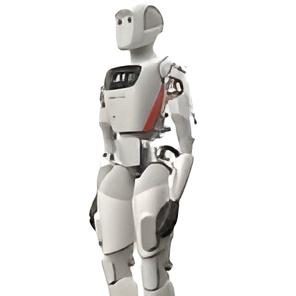


Humanoid Robots: Big Hype, Narrow Uses—For Now
4 min read

Table of Contents
The Reality of Humanoid Robots: Beyond the Hype
The Reality of Humanoid Robots: Beyond the Hype
Despite high-profile demonstrations and significant investment activity, humanoid robots remain at an early stage of practical deployment. While venture capital and corporate funding continue to flow into companies developing human-shaped robots for factories, warehouses, and potential future domestic use, many engineers and industry practitioners emphasize that current capabilities remain limited and highly context-dependent.
Invest in top private AI companies before IPO, via a Swiss platform:
Swiss Securities | Invest in Pre-IPO AI Companies
Own a piece of OpenAI, Anthropic & the companies changing the world. Swiss-regulated investment platform for qualified investors. Access pre-IPO AI shares through Swiss ISIN certificates.
 SmartProfit Finder AG
Current Applications and Limitations
Companies such as Agility Robotics have begun deploying humanoid-style robots like Digit in warehouse environments, where they perform narrowly defined, repetitive tasks under controlled conditions. These deployments demonstrate progress in mobility and manipulation but also highlight the gap between industrial pilots and broader applications, such as unstructured household assistance.
Industry participants frequently note that extending humanoid robots from predictable warehouse settings to dynamic domestic environments would require significant advances in perception, decision-making, and reliability. At industry conferences, including the Humanoids Summit, founders and engineers have emphasized that current humanoid systems should be viewed as early-stage platforms rather than fully commercialized general-purpose products.
Several speakers have drawn comparisons to earlier technology cycles, where concepts were introduced well before enabling technologies matured. In this context, today’s bipedal humanoid robots are often described as experimental systems designed to validate approaches rather than ready-to-scale solutions.
The Hidden Costs and Safety Challenges
One of the primary constraints on broader deployment is the total cost of ownership associated with humanoid robots. In many industrial settings, the robot itself represents only a portion of overall deployment expenses. Additional costs frequently include safety infrastructure such as sensors, monitoring systems, physical barriers, and software controls required to ensure safe operation alongside human workers.
Humanoid robots are sometimes positioned as a potential solution to these challenges due to their size and form factor, which more closely resemble those of humans. Models such as Tesla’s Optimus and Unitree’s G1 approximate adult human dimensions, theoretically reducing the need for extensive physical separation. However, industry experience indicates that consistent and reliable real-world performance remains difficult to achieve outside controlled demonstrations.
Training and Development Challenges
Training humanoid robots remains a complex and resource-intensive process. Many development teams rely on techniques such as teleoperation, where human operators guide robots using virtual-reality systems, or on detailed simulation environments that attempt to replicate real-world conditions. The amount of data and training required to generalize from single-task execution to flexible, multi-task behavior is still not well understood.
As a result, current commercial deployments tend to focus on specific tasks that are hazardous, labor-intensive, or difficult to staff, such as welding in shipbuilding or handling repetitive operations in specialized facilities. While these applications demonstrate tangible progress, they remain limited in scope and do not yet indicate readiness for broad, generalized use across industries or in consumer settings.
Industry Skepticism Versus Big-Tech Optimism
The cautious assessments of engineers and practitioners contrast with more optimistic projections from large technology companies and industry executives, some of whom anticipate large-scale humanoid robot adoption within the next decade. These projections are often supported by broader trends, including increased investment in AI infrastructure, demographic shifts affecting labor availability, efforts to reshore manufacturing, and gradual improvements in batteries, motors, and control systems.
At the same time, many industry analysts emphasize that long-term structural trends do not eliminate near-term technical and economic constraints. Although billions of dollars are invested annually in humanoid robotics, and some forecasts envision substantial workforce adoption by the mid-2030s, skepticism persists regarding whether humanoid form factors will dominate over more specialized robotic systems.
Questioning the Human Form
A recurring debate within the robotics community concerns whether replicating the human body is the most effective approach. Bipedal locomotion introduces balance and stability challenges, while dexterous manipulation with robotic hands remains technically demanding. Humans rely on complex sensory feedback mechanisms that are difficult to reproduce with current hardware and software.
Some engineers argue that many industrial and commercial tasks may be better addressed by robots designed explicitly for efficiency rather than human resemblance. These alternatives may include machines with additional arms, non-anthropomorphic grippers, or task-specific designs optimized for particular workflows. From this perspective, humanoid robots may ultimately occupy a narrower segment of the robotics landscape rather than serving as universal solutions.
The Path Forward
At present, humanoid robots occupy an intermediate position between research prototypes and scalable commercial systems. They are increasingly capable but remain constrained by cost, training complexity, and reliability requirements. While promotional materials often emphasize future household or general-purpose applications, current deployments reflect carefully selected use cases where humanoid form factors provide incremental advantages.
The ongoing tension between cautious engineering assessments and ambitious investment narratives continues to shape the sector’s development. Funding decisions, research priorities, and deployment strategies are influenced by differing views on how quickly humanoid robots can transition from controlled environments to broader adoption.
Over the long term, the most impactful robotic systems may not conform strictly to human form. Instead, a combination of humanoid and non-humanoid machines—each optimized for specific tasks—may define the next phase of automation. As the field evolves, practical performance, economic viability, and safety considerations are likely to play a greater role than visual similarity to humans in determining which robotic technologies achieve widespread adoption.
https://www.wsj.com/tech/ai/humanoid-robot-hype-use-timeline-1aa89c66