

Humanoid Robots Go to Work: AI-Powered Labor Hits the Warehouse Floor
4 min read

Table of Contents
Humanoid Robots in Real Warehouse Jobs
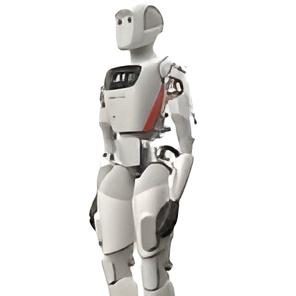
Warehouse automation is entering a new phase as humanoid robots begin operating in limited, real-world commercial environments. In a warehouse in Georgia, two humanoid robots known as Digit, developed by Agility Robotics, are being used to transport bins of shapewear between storage areas and conveyor belts. These tasks were previously performed by human workers.
Invest in top private AI companies before IPO, via a Swiss platform:
Swiss Securities | Invest in Pre-IPO AI Companies
Own a piece of OpenAI, Anthropic & the companies changing the world. Swiss-regulated investment platform for qualified investors. Access pre-IPO AI shares through Swiss ISIN certificates.
 SmartProfit Finder AG
While warehouses already rely heavily on automation, most existing systems—such as conveyor belts, robotic arms, and wheeled robots—are designed for fixed, narrowly defined tasks. Humanoid robots represent a different approach: they are designed to operate within environments built for people and to move between tasks without extensive physical reconfiguration of the workspace.
For many years, humanoid robots were widely viewed as impractical for industrial use due to high costs, limited durability, slow performance, and lower efficiency compared with simpler robotic systems. Recent developments in hardware, software, and labor economics have led some logistics operators and manufacturers to re-evaluate these assumptions, particularly for roles that require flexibility rather than maximum speed.
Economic and Technological Drivers
One of the primary economic arguments for humanoid robots is compatibility with existing infrastructure. Most warehouses and factories are designed around human movement, including stairs, shelving heights, narrow aisles, and tools intended for human hands. Robots with a human-like form can operate in these spaces without requiring costly structural redesigns.
Several logistics and manufacturing companies are now conducting pilot programs to test humanoid robots directly on warehouse floors rather than in laboratory environments. GXO Logistics, for example, has conducted trials involving Digit and other humanoid systems to evaluate their performance in live operations.
Flexibility is frequently cited by operators as a potential advantage. According to GXO’s chief automation officer, Adrian Stoch, the long-term objective is to deploy robots that can perform different tasks throughout a single shift, such as unloading trailers, moving inventory, and staging outbound shipments. This contrasts with traditional automation, which is typically optimized for one task and cannot be easily redeployed.
Cost remains a critical constraint. Humanoid robots require higher upfront investment than many specialized machines, and manufacturers such as Apptronik and Agility Robotics have emphasized affordability and scalability as central design goals. The economic case depends on whether multi-task capability can offset higher acquisition and maintenance costs over time.
AI Breakthroughs and Smart Control Systems
Advances in artificial intelligence and robotics software have played a central role in making humanoid robots viable for pilot deployments. Companies including Nvidia and OpenAI are developing AI models and computing platforms that can be adapted for physical control, enabling robots to perceive their surroundings, plan movements, and respond to changing conditions.
Modern humanoid robots increasingly rely on machine learning rather than rigid, rule-based programming. Earlier generations of robots required engineers to anticipate and code responses for nearly every scenario. Current systems are trained using large datasets and simulations, allowing robots to refine balance, grip, and navigation through repeated practice.
Simulation environments allow robots to test thousands of movement strategies virtually before being deployed on physical hardware, reducing development time and minimizing equipment damage. As a result, newer humanoid robots demonstrate improved stability, object handling, and adaptability compared with earlier prototypes.
These software improvements enable robots to operate alongside human workers with greater safety and flexibility, although continuous supervision and safeguards remain standard in current deployments.
Gradual Implementation and Future Ecosystem
Despite growing interest, humanoid robots are being introduced cautiously. At the Georgia warehouse referenced earlier, only two Digit robots are currently in operation. This reflects a broader industry pattern of incremental testing rather than rapid, large-scale rollout.
Existing forms of automation continue to dominate warehouse operations. Conveyor systems, fixed robotic arms, and wheeled robots remain more efficient for high-volume, repetitive tasks. Humanoid robots are being evaluated as a complementary layer intended to handle tasks that require movement across varied environments or frequent reassignment.
Industry analysts generally expect future warehouses to operate as mixed robotic ecosystems. Different robot types—fixed, wheeled, legged, or hybrid—are likely to coexist, each selected for specific functions based on efficiency, cost, and safety considerations.
Some manufacturers are exploring hybrid designs that combine humanoid upper bodies with non-human mobility systems, such as wheels, to balance dexterity with stability and efficiency. In these designs, functional performance is prioritized over visual resemblance to humans.
Current deployments suggest that humanoid robots are beginning to perform useful work, but at limited scale and under controlled conditions. Their role is evolving gradually as companies assess reliability, safety, and return on investment. Rather than replacing existing automation, humanoid robots are being tested as one component within a broader, diversified approach to industrial automation.
https://www.wsj.com/tech/ai/humanoid-robot-workers-ai-brain-08027439