

Nvidia’s New AI Server Delivers 10x Speed Boost for Next‑Gen Chinese Models
3 min read
Table of Contents
Nvidia's AI Server Revolution: 10x Performance Leap
Nvidia's AI Server Revolution: The 10x Performance Leap Reshaping Artificial Intelligence
The artificial intelligence landscape has experienced a dramatic transformation with Nvidia's latest breakthrough: an advanced AI server system that delivers 10 times faster performance than its previous generation. This remarkable leap forward represents far more than incremental improvement—it signals a fundamental shift in how AI systems operate and deliver real-world results.
The Mixture-of-Experts Revolution
Nvidia’s latest AI server generation delivers a significant performance improvement—up to ten times faster throughput for certain large mixture-of-experts (MoE) models compared with previous Nvidia systems. This shift reflects the rapid adoption of MoE architectures across the global AI ecosystem.
Invest in top private AI companies before IPO, via a Swiss platform:
Invest in AI Unicorns - OpenAI, Anthropic & More | Smartprofit Finder AG
Own a piece of OpenAI, Anthropic & the companies changing the world. Swiss-regulated investment platform. Start with just $10,000.
 Smartprofit Finder AG
MoE models differ from traditional dense architectures by activating only selected expert subnetworks for each inference step instead of computing across all parameters. This design increases efficiency and reduces unnecessary computation while preserving high model capacity.
Interest in MoE approaches expanded after multiple organizations demonstrated that these architectures can reach strong performance using fewer active parameters per query. Open-weight MoE models released by various research groups, including those from China and Europe, showed that architectural efficiency could reduce some training demands and improve inference cost-effectiveness. As a result, MoE architectures have been implemented by multiple AI developers building next-generation reasoning and language models.
Nvidia's Hardware Advantage
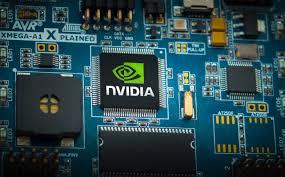
Nvidia’s new AI server integrates 72 advanced GPUs connected through high-bandwidth interconnects optimized for large-scale multi-GPU inference. The dense configuration and improved communication bandwidth allow MoE models to distribute expert computation more effectively across GPUs.
This system is particularly suited for workloads where rapid data exchange between expert modules is essential. Performance testing performed by model developers indicates that MoE models—including Moonshoot AI’s Kimi K2 Thinking model and other large open-weight MoE systems—achieve up to a tenfold throughput gain relative to earlier Nvidia platforms when deployed on this architecture.
The improvement is attributed primarily to:
- High GPU density enabling parallel execution of multiple experts
- Low-latency interconnects supporting fast synchronization across model components
These characteristics reduce inference bottlenecks and enable MoE layers to scale efficiently across many processors.
The New AI Battleground
The introduction of Nvidia’s new server platform comes at a time when the AI industry is shifting focus from model training toward large-scale deployment and inference efficiency. As AI systems expand into commercial products and enterprise applications, inference cost, throughput, and hardware utilization are becoming central competitive factors.
Companies building alternative AI hardware—including AMD and Cerebras—are also targeting inference performance as models grow and user demand increases. Nvidia’s strategy emphasizes that even as certain architectures reduce training hardware needs, high-performance inference still benefits from tightly integrated multi-GPU systems.
Open-weight MoE models from DeepSeek, Moonshoot AI, and other organizations serve as reference workloads to evaluate real-world performance. Their results demonstrate how architectural innovations and optimized hardware jointly influence the efficiency and scalability of advanced AI systems.
The convergence of new model designs with high-performance server hardware suggests an industry transition in which improvements come not only from increasing model size but also from coordinated advances in architecture and system engineering.