

Nvidia’s Vera Rubin AI Chips: Accelerating the Omniverse and the Next Phase of Physical AI
4 min read
Table of Contents
Nvidia's Surprise Reveal: Vera Rubin AI Servers and the Competitive AI Landscape
Nvidia's Surprise Reveal: Vera Rubin AI Servers and the Competitive AI Landscape
Revolutionary Hardware for the Next Era of AI
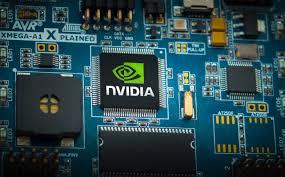
Nvidia has announced its next-generation AI server systems and GPUs, named Vera Rubin, earlier than previously expected. The company revealed the hardware during the Consumer Electronics Show (CES) in Las Vegas, rather than at its traditional spring developer conference. According to Nvidia, the accelerated timeline reflects the growing demand for advanced computing infrastructure driven by artificial intelligence workloads.
Invest in top private AI companies before IPO, via a Swiss platform:
Swiss Securities | Invest in Pre-IPO AI Companies
Own a piece of OpenAI, Anthropic & the companies changing the world. Swiss-regulated investment platform for qualified investors. Access pre-IPO AI shares through Swiss ISIN certificates.
 SmartProfit Finder AG
Vera Rubin is designed to support AI systems that operate in complex simulated environments, which Nvidia refers to as the “Omniverse.” These environments are intended to allow AI models to be trained and tested in virtual settings that replicate real-world conditions. Nvidia states that this approach is particularly relevant for applications such as autonomous vehicles, robotics, and industrial automation, where large-scale simulation can reduce the need for physical testing.
In autonomous vehicle development, for example, virtual simulations can be used to train AI models across a wide range of driving scenarios. Nvidia positions Vera Rubin servers as hardware capable of handling the computational demands of these large-scale simulations, which involve extensive data processing and real-time environmental modeling.
Unprecedented Performance Gains and Cost Reductions
Nvidia reports that Vera Rubin systems were tested on AI models with parameter counts reaching up to 10 trillion. According to the company, these tests showed that such models could be trained in approximately one month using around one-quarter of the chips required by the previous Blackwell architecture. These figures, provided by Nvidia, suggest improvements in training efficiency compared with its prior generation hardware.
In inference workloads—where AI models generate outputs in response to inputs—Nvidia states that Vera Rubin achieves significantly lower operating costs than Blackwell-based systems. The company estimates up to a tenfold reduction in inference cost, which could lower the expense of deploying advanced AI services at scale, depending on application and workload characteristics.
Vera Rubin systems also integrate networking and memory technologies intended to address data movement bottlenecks in large AI clusters. Nvidia emphasizes that efficient communication between chips and servers has become a critical factor in overall system performance as model sizes and dataset volumes continue to grow.
Comprehensive Software Ecosystem and Physical AI
Alongside the hardware announcement, Nvidia introduced updates to its software tools and libraries aimed at supporting what the company describes as “physical AI”—systems that interact with the physical world, including robots and autonomous machines. Nvidia’s strategy continues to focus on providing an integrated stack that combines hardware, networking, and software components.
The company highlights simulation-based training as a key element of this approach. By training AI models in virtual environments, developers can expose systems to a large number of scenarios in a shorter time frame than would be possible through real-world testing alone. Nvidia indicates that Vera Rubin hardware is optimized to support this type of simulation-heavy training workflow.
According to Nvidia, these capabilities are intended to support the development of AI systems for applications such as robotics, logistics, manufacturing, and transportation. The company frames the platform as infrastructure designed to support increasingly complex AI models rather than as a solution tied to a single use case.
Competitive Dynamics and Industry Evolution
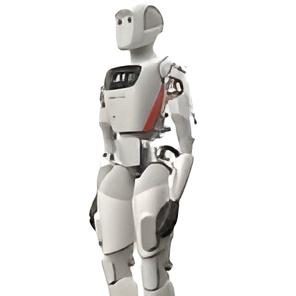
Nvidia’s announcement comes amid increased competition in the AI hardware market. Advanced Micro Devices (AMD) has also expanded its AI portfolio, including the introduction of Instinct MI440X chips and partnerships focused on robotics and industrial AI. AMD’s collaboration with Italian robotics company Generative Bionics on the GENE.01 humanoid robot reflects broader industry interest in simulation-driven training for physical AI systems.
Industry analysts note that Nvidia’s early disclosure of Vera Rubin signals an effort to maintain momentum in a rapidly evolving market. The pace of development in AI hardware has accelerated as demand for large-scale training and inference continues to rise across industries.
The broader trend highlights a shift in AI computing from incremental improvements toward platforms designed to support large, interconnected systems. As model sizes grow and simulations become more central to development workflows, hardware, software, and networking integration is becoming increasingly important.
Nvidia positions its approach as providing end-to-end infrastructure for AI development, covering training, inference, and deployment. The company argues that this integrated strategy is intended to simplify adoption for developers building applications that rely on complex simulations and real-world interaction.
https://www.wsj.com/tech/ai/nvidia-unveils-faster-ai-chips-sooner-than-expected-626154a5