

SpaceX’s Trillion-Dollar IPO Dreams and the AI Chip Stock Poised to Profit
4 min read

Table of Contents
SpaceX IPO and the AI Infrastructure Revolution
SpaceX IPO and the AI Infrastructure Revolution: A Comprehensive Analysis
SpaceX IPO Valuation and Capital Raise Expectations
The potential SpaceX initial public offering represents what could become one of the largest IPOs in history, with the company potentially going public in 2026 at a staggering valuation of $1.75 trillion. Earlier estimates placed SpaceX at $1 trillion, then $1.5 trillion, but expectations have continued to climb. This remarkable valuation growth reflects solid fundamentals: reports suggest SpaceX generated approximately $8 billion in profit on $15 billion to $16 billion in revenue last year. This positions SpaceX not as a cash-burning startup seeking survival funding, but as a profitable enterprise looking to accelerate ambitious future projects.
Expected Capital Requirements and Strategic Vision
At a $1.75 trillion valuation, SpaceX could potentially raise roughly $50 billion in new capital from the IPO. This massive cash influx would not address survival needs but would fund acceleration of transformative, speculative projects. The company's profitable foundation allows for bold capital allocation toward revolutionary initiatives that could reshape both space exploration and computing infrastructure.
Planned Use of Funds: Orbital AI Data Centers and Moonbase Alpha
SpaceX's capital deployment strategy focuses on two headline projects that exemplify the company's ambitious scope: orbital AI data centers and Moonbase Alpha. These initiatives represent a new phase where high-risk, high-reward space projects receive large-scale funding.
Orbital AI Data Centers: Revolutionizing Computing Infrastructure
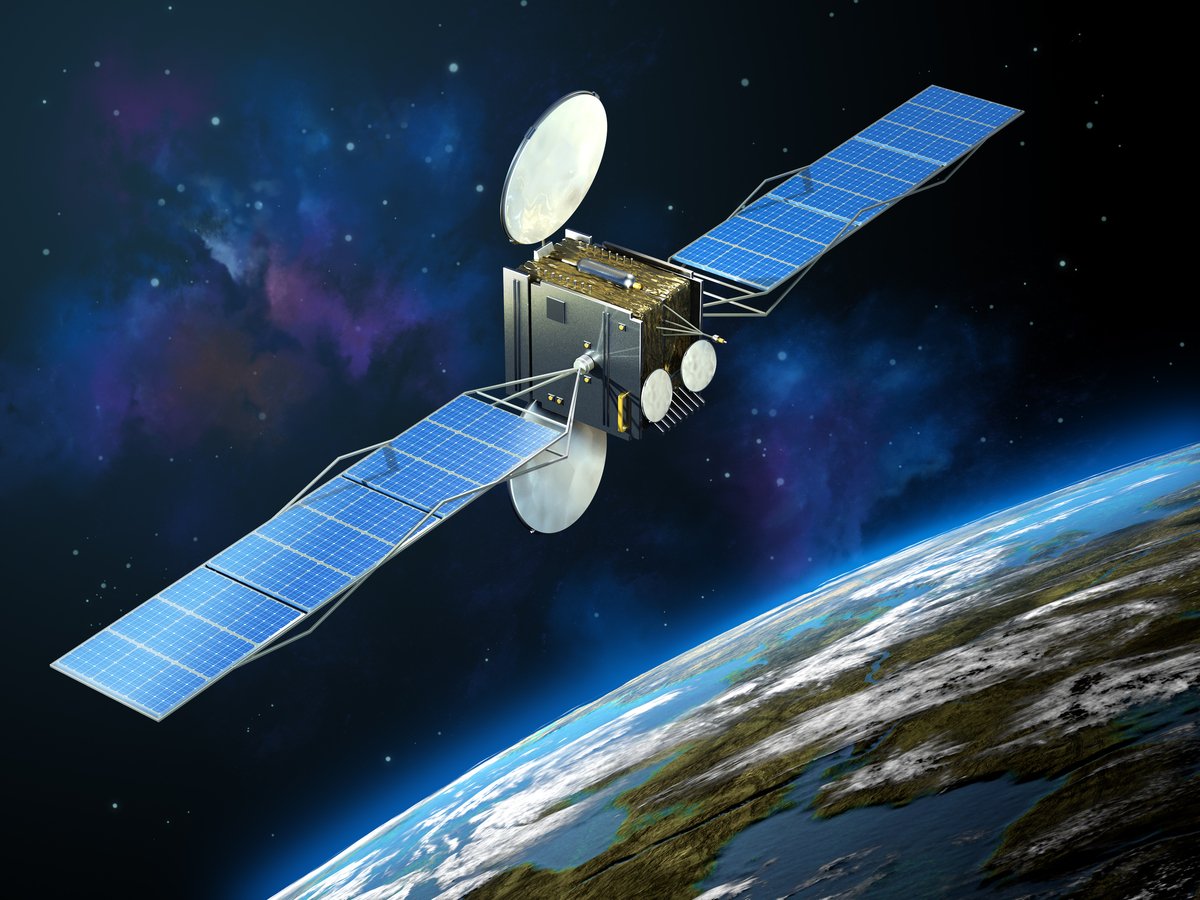
The orbital data center concept addresses fundamental constraints in artificial intelligence infrastructure. Traditional Earth-based data centers face escalating costs: expensive land acquisition, substantial hardware investments, and electricity and cooling expenses that consume 20% to 30% of operating costs, often higher for AI-focused facilities. SpaceX proposes launching modular data centers into orbit using its Starship rocket, leveraging space's unique advantages: unlimited free real estate, abundant solar energy, natural cooling through radiation to space, and freedom from terrestrial regulatory constraints.
However, the scale requirements are extraordinary. To achieve SpaceX's stated goal of up to 1 million satellites for space-based AI computing, analysts estimate approximately 6,667 Starship launches annually would be necessary. This represents hundreds of times more mass than the entire world currently launches to space, placing this vision far beyond realistic near-term timelines while illustrating the project's transformative potential.
Moonbase Alpha: Humanity's Backup Location
Moonbase Alpha represents SpaceX's plan for lunar human colonization, serving as humanity's backup location and an updated parallel to the original Mars colony vision. From a business perspective, this project remains highly speculative with no clear profit pathway. Instead, it functions as a platform for research, development, and experimentation in off-world living, technology, and infrastructure development, prioritizing frontier advancement over immediate returns.
Economic Rationale and Infrastructure Challenges
The space-based data center concept fundamentally represents trading operating costs for capital costs. Traditional data centers require expensive land, substantial power infrastructure, complex cooling systems, and regulatory compliance. Space-based alternatives could potentially eliminate ongoing land and power costs while providing unlimited cooling through radiation. However, this trade requires dramatically reduced launch costs and reliable space-based operations.
Starship's immense payload capacity and planned reusability are critical to making orbital compute economics viable. The engineering challenges are substantial: space's vacuum environment complicates heat transfer compared to Earth's air circulation systems. Additionally, space-based systems face unique reliability requirements, complex maintenance logistics, and uncertain regulatory frameworks for orbital infrastructure.
Nvidia's Strategic Position in the AI Hardware Revolution
Nvidia emerges as the primary beneficiary of expanding AI infrastructure investment, regardless of whether space-based computing materializes. The company controls approximately 85% of the AI chip market, with its Graphics Processing Units becoming the default choice for AI model training and operation due to parallel processing capabilities, software ecosystem maturity, and proven performance in large-scale AI applications.
SpaceX's ambitious plans create a direct demand chain: raising $50 billion in capital, investing heavily in AI infrastructure development, requiring massive quantities of advanced AI chips, and generating substantial Nvidia hardware purchases. Even if orbital data centers never fully materialize, the competitive pressure from SpaceX's vision forces industry-wide acceleration of AI infrastructure spending, driving increased demand for Nvidia's products.
The Broader AI Infrastructure Investment Wave
Major technology companies are projected to spend over $600 billion annually on advanced chips and AI data centers, representing a massive structural shift toward AI-powered infrastructure. This transformation is fundamentally hardware-intensive: every new model, application, and experimental project requires immense computing power, whether deployed in conventional Earth-based facilities or futuristic orbital installations.
Nvidia's position resembles the classic "gold rush shovel seller" – while SpaceX and others pursue speculative space-based computing, Nvidia provides the essential tools that power the entire AI revolution. The company benefits from both successful space ventures and terrestrial AI expansion, positioning it at the center of a fundamental technological transformation.
Investment Implications and Future Outlook
The SpaceX IPO narrative illuminates broader investment themes beyond rocket technology. The $1.75 trillion valuation and $50 billion capital raise signal a new era where ambitious space projects receive institutional-scale funding. However, the most reliable investment opportunities may exist in companies supplying critical infrastructure components rather than the space ventures themselves.
SpaceX's orbital computing vision forces recognition of growing constraints in traditional AI infrastructure: limited suitable land, rising energy costs, regulatory complexity, and cooling challenges. Whether solutions emerge through space-based systems or improved terrestrial technology, the underlying demand for high-performance computing hardware continues expanding.
The convergence of space technology, artificial intelligence, and massive capital deployment creates unprecedented opportunities for infrastructure providers like Nvidia. While orbital data centers remain speculative, the competitive dynamics they create generate immediate demand for AI hardware, making Nvidia a potential beneficiary regardless of specific project outcomes.
This analysis reveals how revolutionary space projects can create value for supporting industries even before achieving their primary objectives. The SpaceX IPO represents not just a single company's ambitions but a catalyst for broader technological advancement, with companies like Nvidia positioned to benefit from the resulting innovation wave and infrastructure investment surge.
SpaceX Could IPO in June at a $1.75 Trillion Valuation. Here Is 1 Stock to Buy Before It Does. | The Motley Fool
If SpaceX goes public, one AI business will surely benefit.
 Ryan Vanzo