

Tesla Targets 2027 Launch for Optimus Home Robots as Core Future Business
3 min read
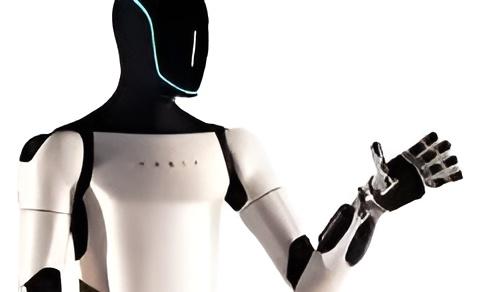
Table of Contents
Tesla's Optimus Robot: From Factory Floor to Public Market
Tesla's Optimus Robot: From Factory Floor to Public Market
The Bold Vision: Optimus Available by End of Next Year
Tesla’s humanoid robot, Optimus, could be available for public sale by the end of next year, according to Elon Musk. The project is moving from internal testing toward broader deployment. At present, Tesla is using early versions of Optimus within its factories to perform simple, repetitive tasks as part of an ongoing development phase.
Invest in top private AI companies before IPO, via a Swiss platform:
Swiss Securities | Invest in Pre-IPO AI Companies
Own a piece of OpenAI, Anthropic & the companies changing the world. Swiss-regulated investment platform for qualified investors. Access pre-IPO AI shares through Swiss ISIN certificates.
 SmartProfit Finder AG
By the end of 2026, Musk expects Optimus to handle more complex assignments, indicating gradual technical progress. The timeline for potential public sales is contingent on three key requirements: high reliability, strong safety performance, and a broad functional range.
Factory Training Ground: Building Real-World Experience
Tesla’s factories serve as real-world testing environments for Optimus. Rather than introducing the robot directly into consumer settings, the company is deploying it in controlled industrial conditions. Initial tasks focus on repetitive operations within production lines, allowing engineers to gather operational data.
Each task provides performance feedback used to refine both hardware and software systems. Tesla has indicated that task complexity will increase over time. By the end of 2026, the company expects Optimus to expand beyond basic material handling toward more dynamic factory roles.
This staged development approach allows the robot to gradually take on more advanced responsibilities. Early phases focus on safely transporting and positioning objects. Later stages may involve component assembly, navigation in active production areas, and adaptation to variable environmental conditions.
Three Pillars Before Launch: Reliability, Safety, and Functionality
Tesla has identified three core conditions that must be met before Optimus is offered for public sale.
Reliability: The Robot Must Just Work
High reliability requires that Optimus operate consistently in real-world environments, not only during demonstrations. Tesla’s internal deployment within factory settings functions as a stress test, exposing the system to continuous operation and operational variability. This process enables identification of performance limitations and necessary improvements before broader commercialization.
Safety: Sharing Space With Humans
Because Optimus is designed to operate in close proximity to people, safety remains a central consideration. The system must demonstrate the ability to navigate shared environments, handle objects appropriately, and respond to unexpected situations without creating hazards. Tesla has indicated that achieving a high safety threshold is essential prior to any consumer release.
Functionality: From Simple Chores to Complex Tasks
Functional capability is another critical requirement. While Optimus currently performs limited tasks, Tesla’s objective is to expand its operational range. The company aims for the robot to complete a wider array of structured activities before entering the market, ensuring that it provides practical utility rather than limited demonstration value.
Strategic Business Shift: Beyond Traditional Automaking
Tesla has increasingly positioned robotics and artificial intelligence as central components of its long-term strategy. Elon Musk has stated that humanoid robots, AI systems, and autonomous technologies may become significant drivers of future company value.
This shift suggests an evolution in Tesla’s identity. Rather than focusing solely on vehicle manufacturing, the company is framing itself as an integrated robotics and AI developer. Vehicles, robots, and autonomy systems are presented as interconnected elements within a broader AI-driven ecosystem.
Market Context: Responding to Weakening EV Sales
Tesla’s electric vehicle growth has slowed in recent years following a period of rapid expansion. The company has faced increased competition, product-cycle pressures, and changes in government incentive structures in certain markets. Vehicle delivery volumes have declined for two consecutive years.
As growth in the core automotive segment moderates, investor attention has increasingly shifted toward future technologies. Market valuation dynamics now reflect expectations related not only to vehicle sales, but also to the company’s ability to commercialize robotics and AI platforms. Optimus has become part of this forward-looking narrative.
The Road Ahead: From Prototype to Powerful Tool
The current factory deployment of Optimus represents an early stage in a longer development cycle. The company’s objective is to transition the system from limited industrial applications to broader commercial availability.
Tesla has indicated that Optimus is intended to become a core business line rather than an experimental project. Achieving this goal will depend on meeting performance thresholds, scaling manufacturing, and demonstrating real-world value. The long-term vision centers on applying AI-driven systems to physical tasks, extending Tesla’s technological focus beyond transportation into robotics and automation.