

Tesla’s High‑Stakes Bet on Humanoid Robots and a Post‑Work Future
5 min read
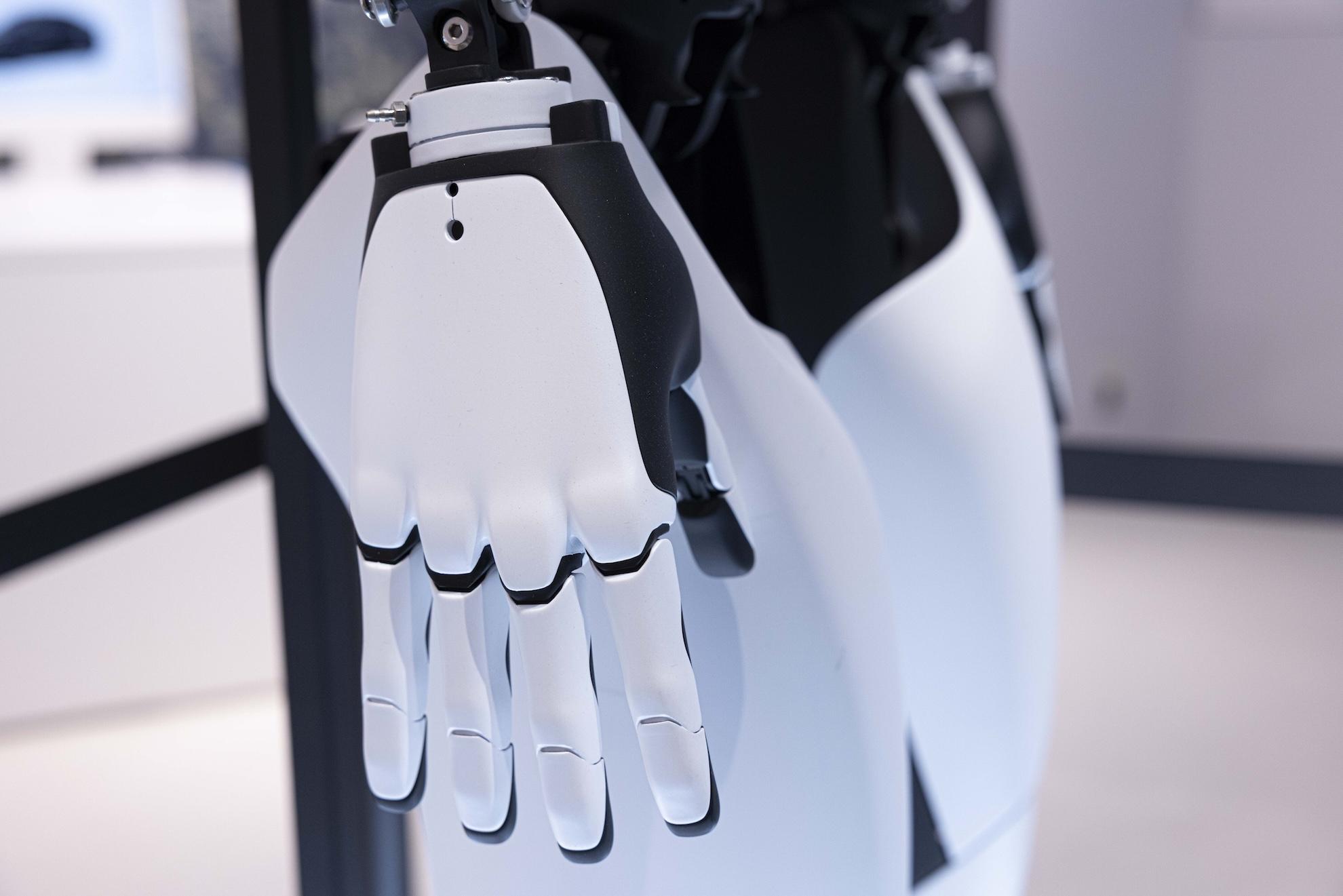
Table of Contents
Tesla's Optimus: The Humanoid Robot Revolution
Tesla's Optimus: From Robot Dancer to Trillion-Dollar Vision
The Bold Shift Beyond Electric Vehicles
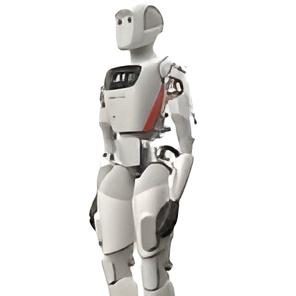
Tesla’s long-term strategy is increasingly focused on robotics and artificial intelligence rather than electric vehicles alone. Central to this shift is Optimus, a humanoid robot that Tesla positions as a potential solution for a wide range of physical tasks, from factory operations to household assistance. Elon Musk has stated that, if successful, humanoid robots could represent a significant future revenue stream for the company.
Invest in top private AI companies before IPO, via a Swiss platform
Swiss Securities | Invest in Pre-IPO AI Companies
Own a piece of OpenAI, Anthropic & the companies changing the world. Swiss-regulated investment platform for qualified investors. Access pre-IPO AI shares through Swiss ISIN certificates.
 SmartProfit Finder AG
Some analysts compare this strategic shift to earlier platform expansions in technology, where an initial product category served as a foundation for broader ambitions. In Tesla’s case, electric vehicles have enabled the company to develop expertise in sensors, computer vision, artificial intelligence, and large-scale manufacturing. These capabilities are now being applied to robotics.
This transition comes at a time when Tesla’s vehicle business faces increased competition and moderating growth. As a result, investor attention has increasingly focused on future projects such as autonomous driving and humanoid robots as potential long-term growth drivers.
Current Capabilities and Technical Reality
Within Tesla’s research facilities, Optimus robots are currently engaged in controlled training environments. These activities include navigating indoor spaces, identifying objects, and performing basic repetitive tasks such as sorting items, folding laundry, and using simple tools.
Public demonstrations have raised awareness of Optimus, but many current capabilities still rely on teleoperation, where human operators remotely control or closely supervise the robot’s movements. In these cases, engineers use specialized equipment to guide the robot in real time, highlighting that autonomy remains limited.
Tesla is adapting techniques originally developed for autonomous vehicles, treating humanoid robots as an extension of its work on perception and navigation. Training involves collecting large amounts of real-world movement data from human environments, combined with robot-based exploration of indoor spaces. Progress remains incremental and focused on reliability rather than full independence.
The Engineering Frontiers: Hands, Eyes, and Legs
Key technical challenges lie in perception, manipulation, and mobility. Robotics researchers widely agree that the ability to understand complex environments, manipulate diverse objects, and respond safely to uncertainty remains a major barrier for general-purpose robots.
Tasks that appear simple to humans—such as clearing a table or handling fragile objects—require robots to combine visual recognition, force sensing, and adaptive decision-making. This complexity increases significantly in environments shared with people, pets, and moving obstacles.
Hand design remains one of the most difficult problems. Engineers must balance strength, sensitivity, and dexterity, enabling robots to grasp objects of varying shapes and materials while adjusting grip in real time. Similarly, bipedal locomotion introduces challenges related to balance, energy efficiency, and safety in case of system failure.
Why the Humanoid Shape Matters
Tesla’s emphasis on a humanoid form is driven by the structure of existing human environments. Factories, offices, and homes are designed around human dimensions, tools, and movement patterns. A humanoid robot could, in theory, operate within these spaces without requiring major infrastructure changes.
Traditional industrial robots are highly effective for specific, repetitive tasks but lack flexibility. Humanoid robots aim to bridge this gap by handling multiple tasks using standard tools. However, this design choice remains debated within the robotics community, as wheeled or task-specific robots often offer greater stability and efficiency for many applications.
From Factory Floors to Living Rooms
Tesla’s public messaging increasingly presents Optimus as both an industrial and consumer-oriented system. Demonstrations and promotional materials suggest future use cases that include household assistance, such as carrying groceries or performing routine chores.
The long-term vision implies widespread adoption, potentially extending beyond workplaces into private homes. This concept aligns with broader discussions about automation reducing time spent on routine physical labor. However, such applications remain conceptual and depend on significant advances in safety, cost reduction, and autonomy.
The Competitive Landscape
Tesla is not alone in pursuing humanoid robotics. A growing number of startups, established robotics firms, and large technology companies are developing systems aimed at flexible physical automation. Competitors vary in approach, with some prioritizing industrial settings and others focusing on research or consumer applications.
Tesla’s potential advantage lies in its manufacturing scale, data collection capabilities, and experience deploying AI systems in physical products. Whether these strengths translate effectively into humanoid robotics remains uncertain, as the technical challenges differ substantially from vehicle autonomy.
Market Potential and Financial Implications
Estimating the market for humanoid robots is inherently speculative. Some long-term projections suggest that, if widely adopted, humanoid robots could represent a multi-trillion-dollar global market over several decades. These estimates assume major breakthroughs in cost, reliability, and autonomy.
From an investment perspective, many analysts treat humanoid robotics as a long-duration option rather than a near-term revenue driver. As a result, Optimus is often excluded from core financial models, with its value considered an upside scenario rather than a baseline assumption.
Current Limitations and Reality Check
Despite high-profile demonstrations, current humanoid robots remain heavily dependent on human oversight. Many public performances involve direct or indirect human control, and each robot typically requires support from multiple engineers.
In laboratory settings, Optimus continues to focus on controlled training tasks rather than real-world deployment. These activities are valuable for learning but remain far from the complexity encountered in homes, factories, or public spaces.
Some manufacturing experts question whether general-purpose humanoids will outperform specialized machines in most industrial contexts. In many cases, task-specific robots remain more efficient, reliable, and cost-effective.
The Investment Dilemma
Tesla’s valuation increasingly reflects expectations around future technologies such as autonomous driving and robotics. For investors, this creates uncertainty around how to price projects that are still in early development but carry potentially large upside.
Professional investors often acknowledge the long-term significance of humanoid robotics while remaining cautious about timelines and execution risk. As a result, Optimus is frequently treated as a strategic option rather than a guaranteed outcome.
The Path Forward
Within Tesla, perspectives on humanoid robotics vary. Some engineers advocate for focused, task-specific automation, while others support the broader humanoid approach. The outcome will depend on Tesla’s ability to translate research progress into reliable, scalable products.
The success of Optimus will ultimately be measured not by demonstrations but by practical deployment: robots performing useful work safely, consistently, and at acceptable cost. Achieving this would have implications for manufacturing, household labor, and the broader automation landscape.
For now, Optimus represents one of Tesla’s most ambitious long-term initiatives. Its development highlights both the potential and the challenges of humanoid robotics, with outcomes that remain uncertain and timelines that extend well beyond the near term.