


Agility Robotics’ $2.5 Billion SPAC Debut in Humanoid Robots
4 min read
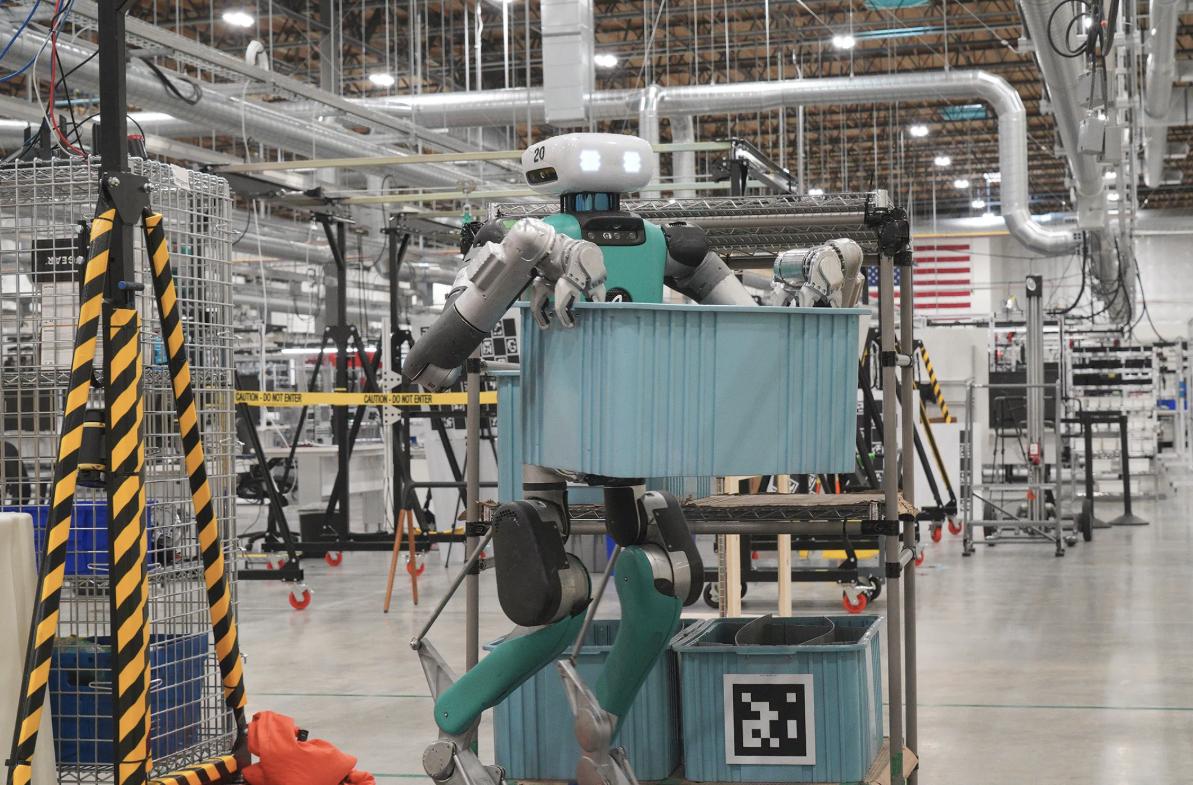
Table of Contents
Humanoid Robots Enter the Real Economy
Humanoid robots are beginning to move from research projects and technology demonstrations into commercial warehouses, factories, and logistics centers, where labor shortages and physically demanding work continue to create operational challenges. This shift reflects growing demand for automation that can operate within environments originally designed for people.
Invest in top private AI companies before IPO, via a Swiss platform:
Swiss Securities | Invest in Pre-IPO AI Companies
Own a piece of OpenAI, Anthropic & the companies changing the world. Swiss-regulated investment platform for qualified investors. Access pre-IPO AI shares through Swiss ISIN certificates.
 SmartProfit Finder AG
Existing warehouses and manufacturing facilities are built around human movement, tools, and workflows. A humanoid robot capable of working within those environments without requiring major infrastructure changes offers a practical advantage over systems that depend on highly customized automation.
Digit, Agility Robotics' flagship robot, is designed to perform repetitive physical tasks such as moving and stacking containers. While these jobs may appear straightforward, they often experience high turnover, rising labor costs, and operational disruption. Reliable automation can therefore create measurable business value rather than simply demonstrating technological capability.
Traditional industrial automation performs best in highly structured environments, whereas modern logistics operations constantly change as demand fluctuates and product flows evolve. Humanoid robotics aims to provide greater operational flexibility by combining physical mobility with software capable of adapting to more dynamic working conditions.
A Public Debut That Signals an Industry
Agility Robotics is going public through a merger with Churchill Capital Corp XI, valuing the company at approximately $2.5 billion and generating expected gross proceeds of more than $600 million. Beyond providing capital, the transaction introduces one of the first publicly traded companies focused primarily on humanoid robotics, giving investors a clearer benchmark for evaluating the sector.
Access to capital is particularly important in robotics, where hardware development, software improvement, manufacturing expansion, and customer support require sustained investment over many years. Public-market visibility may also strengthen confidence among enterprise customers making long-term purchasing decisions with strategic technology suppliers.
For the broader industry, the listing establishes an important public reference point. Investors and analysts will be able to evaluate deployment progress, manufacturing scale, financial performance, and competitive execution using transparent public disclosures. Greater visibility could encourage additional institutional investment as humanoid robotics develops into a more established technology category.
Real Customers Making the Case Investable
Digit addresses one of the most labor-intensive parts of modern logistics: moving goods efficiently through warehouses and distribution centers. Improvements in these operations can reduce costs, increase throughput, and strengthen supply-chain performance across multiple industries.
Customers including Amazon, GXO, Schaeffler, and Toyota Motor Manufacturing Canada provide evidence that the technology is being evaluated in demanding commercial environments rather than controlled demonstrations. Adoption by experienced industrial operators offers valuable validation as the market develops.
Each commercial deployment generates operational data that improves software performance while expanding the company's practical experience in real-world environments. That accumulated knowledge can strengthen product reliability and create capabilities that are difficult for competitors to reproduce through laboratory testing alone.
The business case is increasingly based on measurable operational outcomes. Repetitive physical jobs often involve high turnover, ongoing training costs, and workplace injuries. Robots that improve productivity while reducing physical strain can become part of long-term workforce planning rather than isolated technology experiments.
A Fast-Moving Competitive Race
Competition across humanoid robotics is accelerating. Companies including Tesla, Boston Dynamics, Figure AI, Apptronik, and Agility Robotics are all investing in commercial deployments. Growing competition reflects confidence that the addressable market is becoming large enough to support multiple participants while increasing customer awareness of the technology.
Entering public markets early may also provide strategic advantages. Public companies typically receive broader analyst coverage, greater visibility among institutional investors, and additional opportunities to establish commercial partnerships as customers evaluate emerging technology suppliers.
Long-term success will ultimately depend on execution. Enterprise customers will evaluate reliability, maintenance requirements, deployment speed, total cost of ownership, and software performance before expanding adoption. Companies capable of improving products while efficiently scaling manufacturing and customer support are likely to build more durable competitive positions.
Labor Pressure, Leadership, and the Bigger Thesis
Persistent labor shortages remain one of the strongest drivers of humanoid robotics adoption. Many industries continue to struggle with recruiting and retaining workers for physically demanding, repetitive roles, while labor constraints increase operational costs and reduce supply-chain efficiency. These conditions are making automation an increasingly practical business decision rather than a discretionary technology investment.
The company is led by Peggy Johnson, whose leadership experience at Microsoft and Magic Leap brings operational credibility to the commercialization effort. Successfully scaling advanced robotics requires more than technical innovation. It also depends on customer relationships, access to capital, manufacturing execution, and the ability to translate complex technology into commercially viable products.
The investment opportunity ultimately depends on execution over time. A platform initially solving a specific operational challenge can expand into additional applications as customer confidence grows and operational data improves system performance. Companies capable of delivering measurable productivity gains, reliable deployment, lower workplace injury risk, and scalable operations are likely to establish the strongest long-term competitive positions as humanoid robotics evolves into a larger commercial industry.