


Apptronik Secondary Sale Highlights Rising Investor Interest in Humanoid Robotics
4 min read
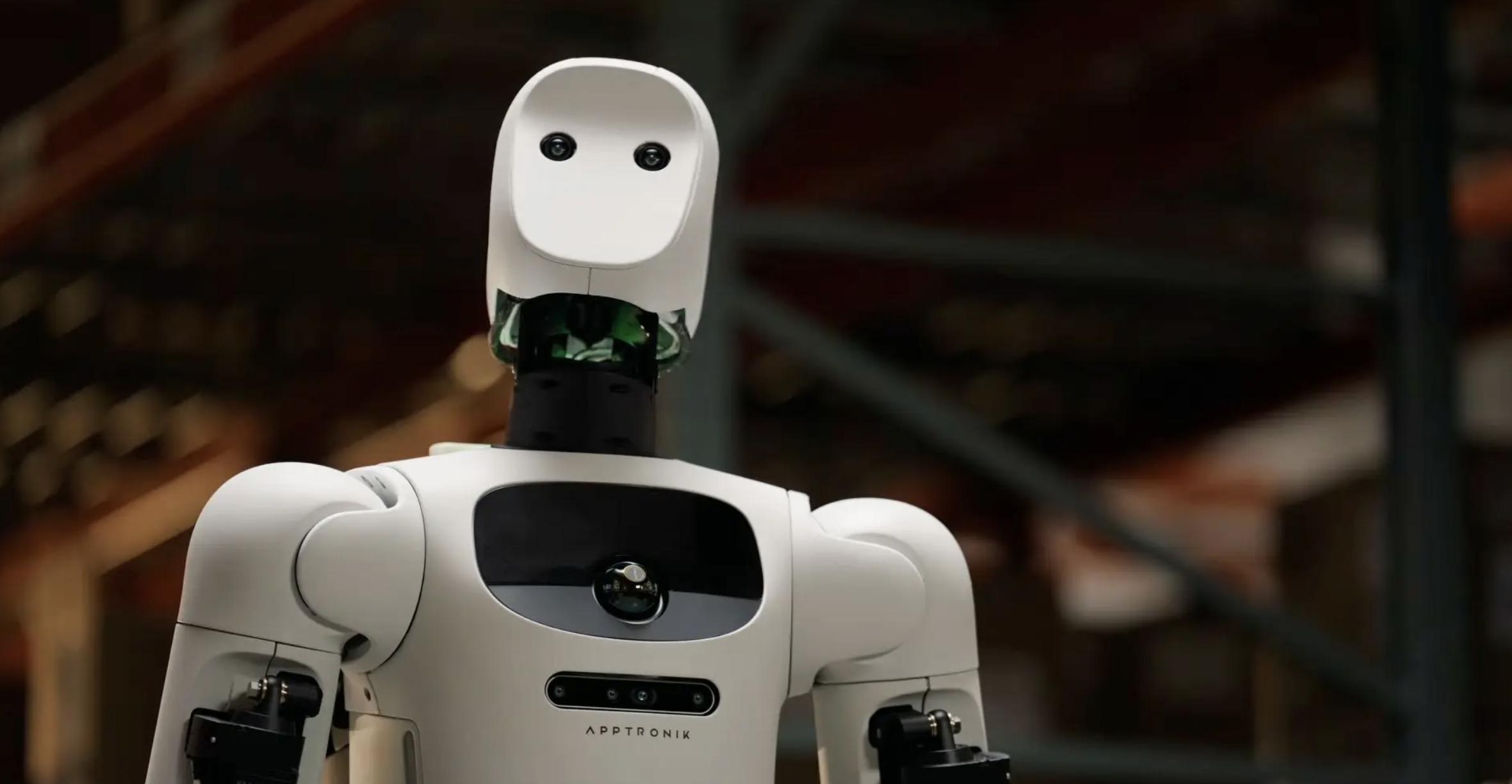
Table of Contents
Investor Confidence Is Turning Humanoid Robotics Into a Serious Market Story
When investors purchase existing shares in a private robotics company, they signal growing confidence in its long-term commercial potential. A secondary share transaction allows current shareholders to sell ownership to new investors without issuing additional stock or diluting existing holdings. In emerging technologies, such transactions often indicate that investors increasingly view the company as a credible participant in a developing market.
Invest in top private AI companies before IPO, via a Swiss platform:
Swiss Securities | Invest in Pre-IPO AI Companies
Own a piece of OpenAI, Anthropic & the companies changing the world. Swiss-regulated investment platform for qualified investors. Access pre-IPO AI shares through Swiss ISIN certificates.
 SmartProfit Finder AG
The investment thesis is straightforward. A humanoid robot is a general-purpose labor platform designed to operate in environments built for people while using tools created for human hands. Instead of redesigning factories, warehouses, or healthcare facilities around specialized automation, organizations can deploy robots that integrate into existing workplaces. This expands the potential market across manufacturing, logistics, healthcare, retail, and elder care.
The transaction suggests that institutional investors increasingly view humanoid robotics as a commercially viable long-term market rather than an experimental technology.
Humanoid Robots Could Reshape Work Because They Fit the Human World
The most successful technologies often succeed because they adapt to existing environments rather than requiring those environments to change. Factories, warehouses, hospitals, and homes were designed around human movement and interaction. Humanoid robots can operate within these spaces, reducing the need for costly infrastructure modifications and improving the economics of automation.
Traditional industrial robots perform exceptionally well in repetitive, highly structured environments but are less effective when tasks or surroundings change frequently. Humanoid robots are designed for more dynamic situations where flexibility, mobility, and decision-making are as important as precision and strength. This makes them increasingly relevant in industries facing labor shortages, rising operating costs, and physically demanding work.
The business model increasingly resembles a software-driven technology platform more than traditional industrial machinery. Hardware provides the physical platform, while software continuously expands the robot's capabilities through improvements in perception, movement, and decision-making. As performance improves, the same platform can address additional industries without requiring entirely new hardware designs.
AI Is the Invisible Engine That Turns a Robot From Machine Into Worker
Without artificial intelligence, a humanoid robot remains a programmable machine with limited flexibility. AI enables it to interpret its surroundings, recognize objects, plan movements, and adjust when conditions change unexpectedly. The robot's hardware provides mobility and manipulation, while AI determines how effectively those capabilities translate into useful work.
From an investment perspective, AI creates value because it continues improving after deployment. Unlike traditional machinery with largely fixed functionality, AI-enabled systems can expand their capabilities through software updates and learning from operational experience. As more robots operate in real environments, they generate additional data that improves navigation, object recognition, and task execution, creating a reinforcing cycle of performance improvements.
AI, however, is not a substitute for reliable engineering. Real workplaces remain unpredictable, with changing lighting conditions, moving people, and constantly evolving tasks. Commercial success depends on consistently combining robust hardware with dependable AI. When intelligence and mobility mature together, humanoid robots become practical labor solutions rather than technical demonstrations.
From University Lab to High-Growth Company, Talent Is Becoming a Competitive Weapon
Many breakthrough technology companies begin as university research projects before evolving into commercial businesses. A robotics company emerging from an academic environment often benefits from deep expertise in mechanical engineering, artificial intelligence, perception, and safety—disciplines that must work together to build successful humanoid systems.
As these organizations expand, their ability to attract and retain specialized engineers becomes an increasingly important competitive advantage. Experts in embodied AI, robotics software, mechanical design, and large-scale deployment remain scarce. Building teams with this combination of skills creates capabilities that are difficult to replicate through capital investment alone.
For investors, organizational growth signals increasing execution capability rather than simply technical innovation. Expanding engineering, manufacturing, and commercial teams demonstrates that a company is building the operational foundation required to compete in an emerging industrial market.
The Real Prize for Investors Is Not a Single Robot but a New Automation Platform
The most significant investment opportunities often emerge from platforms that can expand across multiple industries. A humanoid robot may initially prove its value in manufacturing or logistics, but improvements in software and AI can gradually extend the same platform into healthcare, retail, hospitality, and home assistance. As deployment broadens, the commercial opportunity expands alongside it.
Labor shortages affect nearly every sector of the economy. If adaptable humanoid systems automate even a modest share of repetitive physical tasks, the addressable market becomes substantial. Beyond hardware sales, companies can also generate recurring revenue through software updates, maintenance services, fleet management, and data-driven operational tools, creating longer-term customer relationships.
Long-term success will ultimately depend on reliable performance, economic viability, and seamless integration into customer operations. These demanding requirements also create high barriers to entry for future competitors. The broader opportunity extends beyond a single robot. It lies in creating a scalable automation platform capable of supporting physical work across multiple industries as AI and robotics continue to evolve.
Apptronik Raises $4.2 Million in Secondary Share Sale, Signaling Growing Investor Confidence in Humanoid Robotics - citybuzz
Apptronik, a developer of humanoid robots, has completed a $4.2 million secondary share transaction, providing investors access to the company and highlighting the sector’s momentum.