
Harmattan AI’s Drone Surge and Europe’s Defense Ambition
5 min read
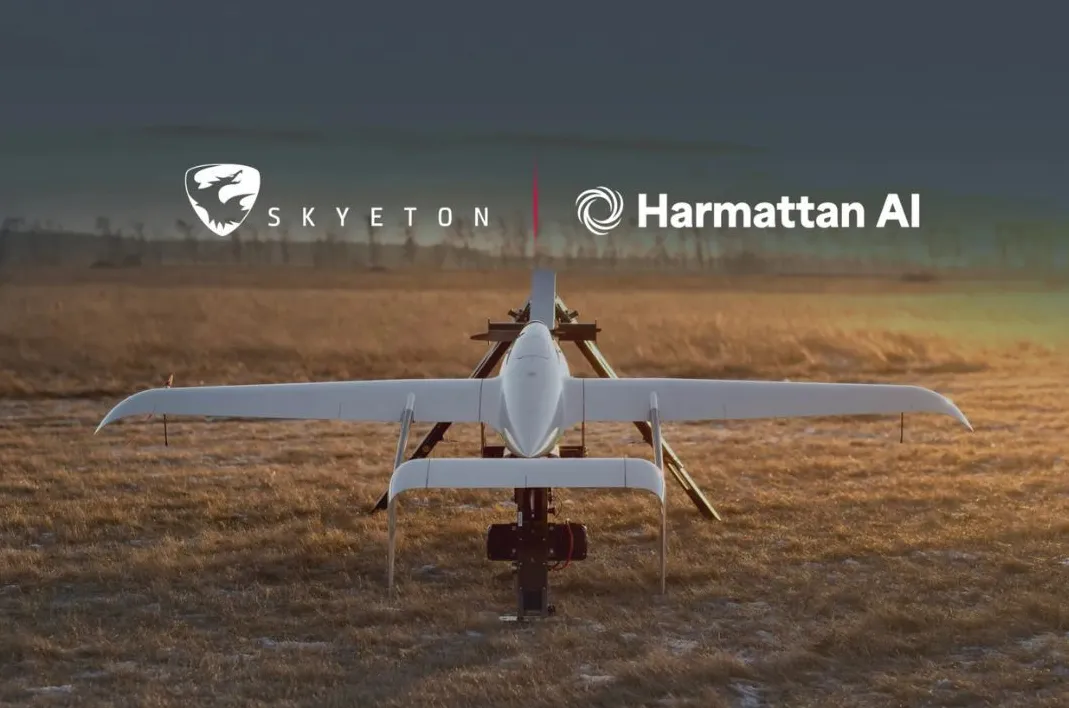
Table of Contents
A French Startup Turns a Quiet Corner of Industry Into a Strategic Battleground
Big changes often begin without much noise. Harmattan AI, a young French company, is moving quickly in the drone market with a pace that feels less like ordinary growth and more like the start of an industrial shift. Sitting where artificial intelligence meets defense technology, the company has reached a production pace of 1,300 drones per month, with exports to the United Kingdom already underway. The larger signal lies in what comes next: a new factory in the Orly region targeting annual capacity of 100,000 aircraft, moving the company firmly into the ranks of serious industrial players.
Invest in top private AI companies before IPO, via a Swiss platform:
Swiss Securities | Invest in Pre-IPO AI Companies
Own a piece of OpenAI, Anthropic & the companies changing the world. Swiss-regulated investment platform for qualified investors. Access pre-IPO AI shares through Swiss ISIN certificates.
 SmartProfit Finder AG
Harmattan AI's rise reflects a broader European ambition to reduce dependence on outside suppliers for critical technologies. Founded by former Dassault Aviation engineers and AI specialists, the company blends traditional aerospace precision with modern machine intelligence, designing complete systems with both flight and autonomy in mind. A domestic drone champion gives governments more control, more flexibility, and more confidence. Sometimes a startup is just a startup. Sometimes it signals that the map of power is being redrawn. Harmattan AI looks much more like the second kind.
Inside the Gobi Drone: How Artificial Intelligence Makes Small Aircraft Much Smarter
Harmattan AI's Gobi drone series captures a powerful idea: technology becomes transformative not by getting bigger, but by getting smarter. Instead of acting like a remote-controlled object, the Gobi uses machine learning to interpret surroundings and adjust accordingly, reducing friction between sensing and acting.
Key capabilities include real-time path planning, which lets the drone find safer and more efficient routes as conditions shift, and obstacle avoidance, enabling operation in complex environments with less supervision. Target recognition helps narrow human attention to what matters, saving time in surveillance and inspection work. Perhaps most compelling is group collaboration: coordinated drone teams can cover territory faster, divide tasks, and respond to change more efficiently than any single unit.
What makes this especially compelling is that the sophistication is packaged into compact aircraft. Small size no longer means limited function. A smarter drone is not just a better gadget. It is a more capable platform, and that is why intelligent flight is attracting so much attention.
From Workshop to Factory: Why Scaling Production Is the Real Test
Inventing something impressive is hard. Building it repeatedly, at high quality and lower cost, is often harder. Harmattan AI's story becomes compelling because it is not only developing intelligent drones but pushing toward industrial scale. Production at 1,300 units per month signals a company moving past the startup phase. The planned leap to 100,000 aircraft annually raises the stakes dramatically, making manufacturing central to the company's identity.
Leadership has framed the expansion as an AI-driven manufacturing revolution, with automation deeply integrated into production rather than added as an afterthought. Generative AI in the supply chain helps analyze complex variables and recommend better decisions, turning small improvements into major financial gains across thousands of units. Lower cost per unit broadens adoption, opens the door to larger fleets, and can strengthen margins simultaneously.
The Orly location is strategically practical, offering proximity to aviation expertise, suppliers, and industrial partners. Public investment signals strategic intent beyond a simple business plan, reflecting ambitions to reinforce national industrial capability and create skilled jobs. The deeper lesson is this: the winners in frontier technology are increasingly those who can build both the intelligence layer and the physical delivery system. Many firms can imagine the future. Fewer can manufacture it at speed.
Why Europe Suddenly Cares So Much About Drones and Strategic Independence
Europe's growing interest in domestic drone manufacturing is a response not just to technology trends, but to geopolitical reality. Trade disputes, military conflict, and export restrictions have exposed hidden weaknesses in globally dispersed supply chains. The conflict in Ukraine accelerated this realization, demonstrating how important drones had become for security while highlighting the risks of depending on outside suppliers.
This backdrop gives Harmattan AI's expansion its larger meaning. Domestic production reduces exposure to external pressure and makes procurement faster, more predictable, and more politically acceptable. Governments want supply security. Companies want growth. Investors want sectors with structural tailwinds. A drone manufacturer fitting all three can attract unusual momentum.
The dual-use angle makes the sector even more significant. Technologies developed for defense-adjacent purposes can also serve coastline monitoring, infrastructure inspection, disaster response, and logistics support, widening the market over time. Strategic independence is no longer a slogan. It is becoming a market driver, and drones are one of the clearest places where that change can be seen.
The Promise and the Tension: Responsible AI and the Rules of the Next Era
Every disruptive technology arrives carrying two stories: possibility and responsibility. Even non-weaponized autonomous systems can influence enforcement, surveillance, and public accountability, making questions of governance essential. Transparency is a major concern. AI systems can be highly effective while remaining difficult to understand, and when they operate in real-world environments, mistakes can carry legal, political, or safety consequences. Who is accountable when something goes wrong?
Harmattan AI's alignment with the EU AI Act and use of third-party audits reflects an attempt to build credibility before mistrust hardens. In regulated sectors, trust is not a marketing extra but an operating requirement. There is an interesting paradox here: clear regulation can actually enable adoption, giving governments and customers the confidence to commit. Responsible AI is not only an ethical position. It can be a commercial strategy.
The future of AI-driven drones will not be decided by technology alone. It will be shaped by trust, rules, and the ability to prove that autonomy can serve society without escaping accountability. Build trust, and the market can soar. Ignore it, and progress may stall. In disruptive industries, responsibility is not the cost of growth. It is the price of admission.
French AI startup Harmattan’s drone production capacity soars: 1300 per month, aiming to surpass 100000 by 2026
Harmattan AI, a French AI startup, produces 1300 AI drones per month. In June 2026, the new Oli factory will be put into operation, with an annual production capacity of 100000 drones. The company’s Gobi series integrates AI autonomous decision-making to fill the gap in the European defense supply chain. Although it has sparked environmental and ethical controversies, it will expand the agricultural and disaster relief civilian markets in the future, and promote European AI technology autonomy.