

SpaceX IPO Surge Pushes Valuation Past Amazon and Near Microsoft
5 min read
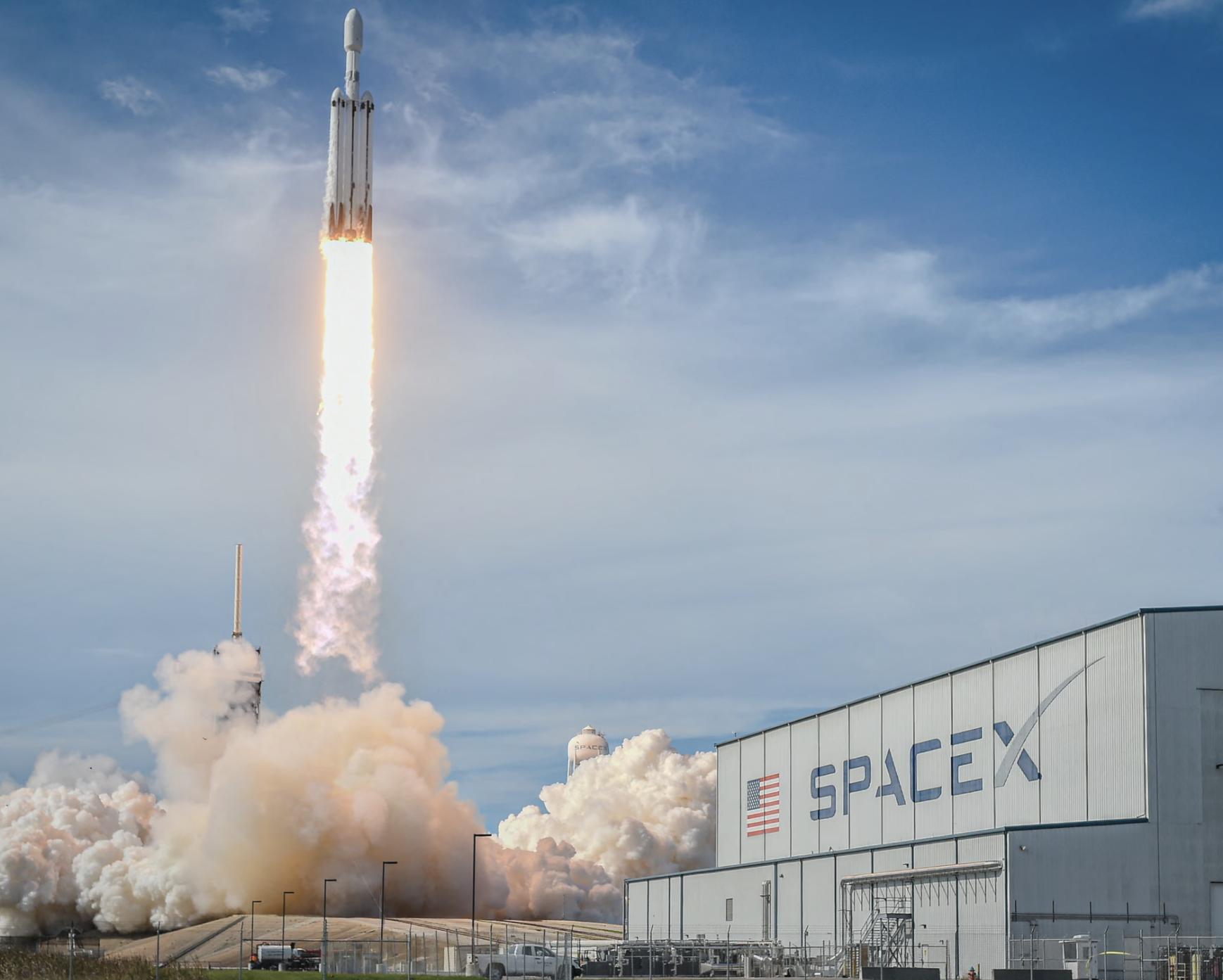
Table of Contents
A New Titan Bursts Onto the Market
SpaceX entered public markets with exceptional momentum, pushing its market valuation above Amazon and approaching Microsoft's level within days of its IPO. The move reflects strong investor demand and growing confidence in the company's long-term position across multiple high-growth industries.
Invest in top private AI companies before IPO, via a Swiss platform:
Swiss Securities | Invest in Pre-IPO AI Companies
Own a piece of OpenAI, Anthropic & the companies changing the world. Swiss-regulated investment platform for qualified investors. Access pre-IPO AI shares through Swiss ISIN certificates.
 SmartProfit Finder AG
Investors increasingly view SpaceX as more than a launch provider. The company operates across commercial space transportation, satellite communications, defense infrastructure, artificial intelligence, and data networks. This broad exposure has helped position SpaceX as one of the most closely watched technology and infrastructure companies in the world.
Public markets often value companies based on future growth potential rather than current financial results alone. In SpaceX's case, investors are assessing the company's ability to expand its influence across several large markets over the coming decade. This forward-looking perspective can support higher valuations when investors believe a company has significant competitive advantages and large addressable markets.
What makes the recent move particularly notable is the speed at which it occurred. Large-cap companies typically take years to climb the global valuation rankings. Strong demand combined with a limited supply of tradable shares accelerated SpaceX's rise, highlighting the intensity of investor interest following the IPO.
The market's response suggests that many investors see SpaceX as a potential long-term infrastructure leader. Such confidence can lower financing costs, strengthen strategic flexibility, and provide additional resources for future expansion.
Why Investors Are Treating SpaceX Like More Than a Rocket Company
A key driver behind SpaceX's valuation is the perception that the company is building critical infrastructure rather than operating within a single industry. Historically, infrastructure included transportation networks, utilities, and communications systems. Today, satellite-based connectivity and space-enabled communications are increasingly viewed as part of that category.
Starlink plays a central role in this investment thesis. The satellite network provides internet access across remote regions, commercial markets, government agencies, military organizations, airlines, maritime operators, and emergency-response services. This creates recurring revenue opportunities that extend beyond the traditional launch business.
The launch segment also remains strategically important. By reducing the cost of access to space, SpaceX has helped expand demand for satellite deployment, scientific missions, defense applications, and commercial space activities. Lower launch costs can encourage the development of entirely new industries that depend on affordable access to orbit.
Artificial intelligence adds another layer to the company's long-term growth story. AI systems require connectivity, computing resources, data transmission, and secure infrastructure. Investors increasingly see value in companies capable of supporting both physical infrastructure and digital intelligence platforms.
Governments around the world are also investing heavily in communications resilience, national security, and technological independence. SpaceX's growing involvement in strategic government programs strengthens the view that its services could remain important across both commercial and public-sector markets for years to come.
The Wild Mechanics of a Post-IPO Surge
Strong fundamentals are only part of the explanation behind major post-IPO moves. Market structure can also play a significant role during the first weeks of trading.
Following an IPO, the number of shares available for trading is often relatively limited compared with total investor demand. When buyers compete for a constrained supply of shares, prices can rise rapidly.
Options activity may amplify this process. Increased demand for call options can force market makers to purchase additional shares to hedge their exposure, creating further upward pressure on the stock price. Combined with institutional demand and retail participation, these dynamics can accelerate short-term price movements.
Potential inclusion in major stock indexes can also contribute to demand. Once a company becomes part of widely followed benchmarks, passive investment funds and exchange-traded funds may be required to purchase shares regardless of their individual investment views.
These same mechanisms can work in reverse if market sentiment changes. Additional shares entering circulation, weaker demand, or profit-taking by investors can increase volatility. As a result, short-term stock performance does not always move in line with underlying business fundamentals.
The Valuation Debate: Vision Versus Reality
Every rapidly appreciating company eventually faces the same question: how much future growth is already reflected in the share price?
Traditional valuation methods work best when companies operate within mature industries and have stable financial profiles. SpaceX, however, spans several rapidly evolving sectors, including commercial space, communications infrastructure, defense technology, and artificial intelligence.
The challenge for investors is determining whether future growth can justify current expectations. When a company achieves a valuation comparable to some of the world's largest corporations, investors are effectively pricing in years of expansion, market-share gains, and continued execution.
At the same time, history shows that many transformational businesses appeared expensive long before their full economic potential became visible. New technologies often create opportunities that are difficult to measure using conventional frameworks, particularly during periods of rapid adoption.
The key distinction is between company quality and stock valuation. A business can possess strong assets, technological advantages, and significant long-term opportunities while still experiencing periods of valuation compression if growth falls short of market expectations.
Ultimately, the debate will be resolved through execution. Revenue growth, profitability, customer adoption, and strategic relevance will determine whether current valuation levels prove justified over time.
What This Means for Investors and the Future of Markets
SpaceX's market debut highlights a broader shift in investor priorities. Capital increasingly flows toward companies that combine advanced technology, strategic importance, and the potential to influence multiple industries simultaneously.
For investors, the case illustrates the importance of identifying businesses that create new markets, reduce costs, and establish infrastructure that others depend upon. These characteristics often support long-term value creation, particularly when reinforced by strong competitive positioning.
At the same time, investors should recognize that market enthusiasm can move faster than business results. Strong technology trends do not automatically guarantee attractive investment returns if expectations become excessive.
Over the long term, financial performance remains the ultimate measure of success. Revenue growth, operating efficiency, expanding customer adoption, and sustained competitive advantages will determine whether SpaceX's market value continues to grow.
The company's rise reflects growing investor confidence in space infrastructure, satellite communications, and next-generation technology platforms. Whether current valuation levels prove sustainable will depend not on market excitement alone, but on SpaceX's ability to convert its strategic position into durable financial performance.