
Tesla’s Robotics Push Drives Investor Focus
4 min read
Table of Contents
Tesla's Story Is Expanding Beyond Cars
Tesla is increasingly asking investors to value it as an artificial intelligence and robotics company rather than simply an electric vehicle manufacturer. Cars remain the foundation of the business, but the company's broader ambition is to build intelligent systems capable of understanding the physical world, making decisions, and operating autonomously. The same AI technologies developed for vehicles are also being applied to humanoid robots, expanding Tesla's vision beyond transportation into physical automation.
Invest in top private AI companies before IPO, via a Swiss platform:
Swiss Securities | Invest in Pre-IPO AI Companies
Own a piece of OpenAI, Anthropic & the companies changing the world. Swiss-regulated investment platform for qualified investors. Access pre-IPO AI shares through Swiss ISIN certificates.
 SmartProfit Finder AG
From a valuation perspective, this changes the investment narrative. Traditional automakers are typically valued on vehicle production, margins, and market share. Companies developing scalable AI ecosystems attract attention because one technological breakthrough can create opportunities across multiple industries. Investors are increasingly evaluating whether Tesla can evolve into one of the defining physical AI companies of the coming decade rather than simply the world's largest EV manufacturer.
Robotaxi Could Redefine Transportation Economics
The economic case for robotaxis is straightforward: autonomous driving software replaces the need for a human driver, allowing vehicles to operate for far more hours each day while generating recurring revenue. Higher utilization spreads ownership costs across many more trips, potentially making transportation more affordable while improving returns on each vehicle deployed. The opportunity extends beyond selling cars to participating in a transportation network that continuously generates income.
Tesla's strategy stands out because it controls the hardware, software, onboard computing, and data feedback loop within a single ecosystem. Its vision-based AI learns from enormous amounts of driving data collected across its vehicle fleet. If fully autonomous driving proves reliable and gains broad regulatory approval, Tesla could combine software-like economics with physical assets at global scale. Success, however, still depends on technical reliability, regulatory acceptance, and public trust in autonomous transportation. Lower transportation costs could ultimately reshape commuting patterns, urban planning, and consumer behavior.
Optimus Brings AI Into the Physical Workforce
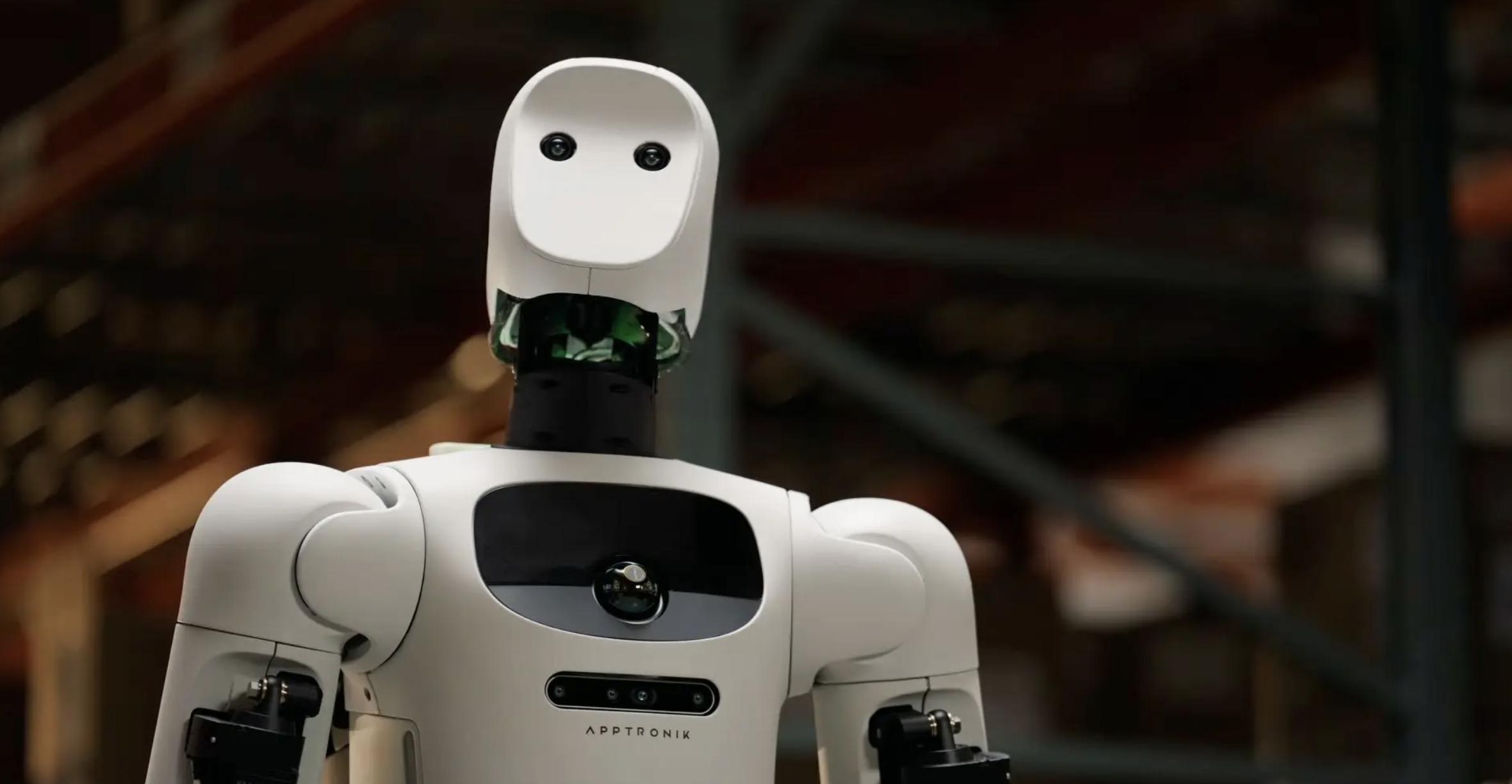
If robotaxis aim to transform transportation, Optimus is designed to reshape physical work. Human environments are already built for human movement, making humanoid robots particularly attractive because they can operate within existing factories, warehouses, and workplaces without requiring major redesign. Tesla's long-term objective is to build adaptable machines capable of performing repetitive, physically demanding, or hazardous tasks where labor shortages continue to grow.
The commercial opportunity is enormous because labor remains one of the largest costs across the global economy. Unlike conventional industrial robots that perform narrowly defined tasks, a humanoid robot powered by advanced AI could work across manufacturing, logistics, healthcare, construction, and other industries. Tesla's advantage may come from leveraging the same perception and decision-making technologies across both vehicles and robots. Improvements in one area can strengthen the other, creating efficiencies that competitors focused on a single application may struggle to match.
Why Investors Watch Sentiment, Deliveries, and Reality Simultaneously
Tesla occupies a unique position in financial markets because investors are evaluating two businesses simultaneously: the automotive company generating revenue today and the AI-driven enterprise management hopes could emerge tomorrow. Vehicle deliveries remain one of the clearest measures of operational performance, yet investor sentiment often reflects expectations about robotics and autonomous driving as much as current automotive results.
That dynamic makes Tesla behave more like a high-growth technology company than a traditional manufacturer, even though it still operates in a capital-intensive industry. Changes in factory utilization, AI investment, or product development are interpreted not only as operational decisions but also as signals about management's long-term priorities. Vision can attract investor attention, but sustained execution remains the factor that ultimately determines long-term value creation.
The Shared AI Engine Could Be the Biggest Prize of All
The most valuable strategic asset may not be any individual product but the common AI foundation supporting multiple intelligent machines. Autonomous vehicles, robotaxis, and humanoid robots all depend on the same core capabilities: understanding the physical environment, interpreting changing conditions, and making safe decisions in real time. Every deployment generates additional real-world data, allowing the system to improve continuously through a reinforcing learning cycle.
This shared AI foundation changes how the market may eventually value the business. Rather than viewing vehicles and robots as separate product categories, investors may increasingly see a technology ecosystem where advances in one application strengthen every other. If Tesla successfully executes this strategy, it could evolve beyond automotive manufacturing into a provider of intelligent physical systems operating across transportation, logistics, manufacturing, and other industries. The scale of that opportunity is significant, but its realization will ultimately depend on execution rather than ambition alone.
https://finance.yahoo.com/technology/ai/articles/why-tesla-inc-tsla-top-134753521.html