
OpenAI’s Shift From Chatbot to AI Work Platform
3 min read
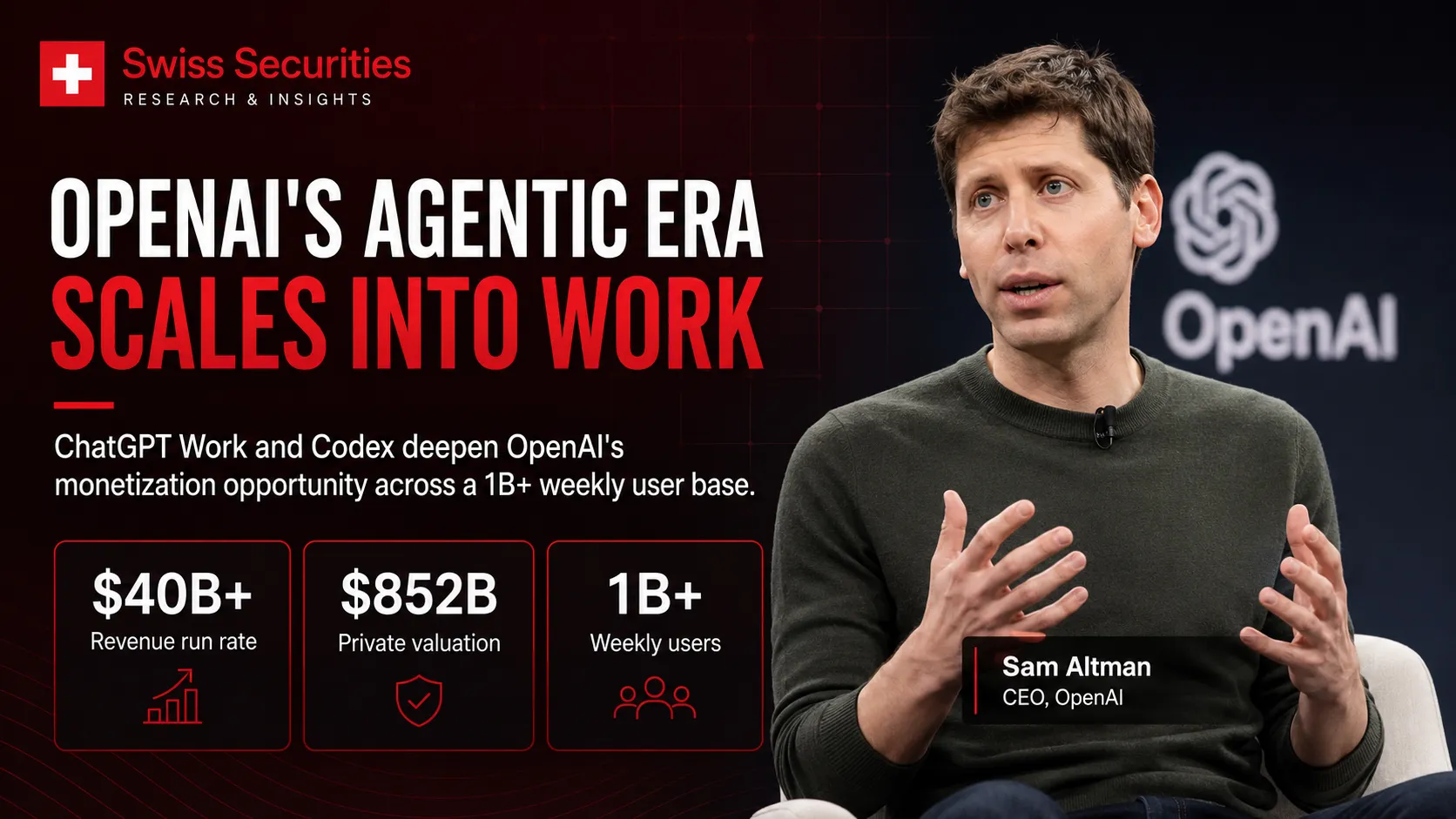
Table of Contents
From Answer Machine to Work Platform
Something fundamental shifts when a technology stops being a clever tool and becomes a place where real work gets done. OpenAI is pushing ChatGPT beyond question-and-answer toward a platform where users delegate complex work and expect results. An answer engine provides moments of usefulness; a work platform becomes part of the daily routine. Habits are worth more than curiosity.
Invest in top private AI companies before IPO, via a Swiss platform:
Swiss Securities | Invest in Pre-IPO AI Companies
Own a piece of OpenAI, Anthropic & the companies changing the world. Swiss-regulated investment platform for qualified investors. Access pre-IPO AI shares through Swiss ISIN certificates.
 SmartProfit Finder AG
ChatGPT Work connects with tools like Email, Slack, Notion, and Figma, positioning OpenAI as part of the operating layer of knowledge work rather than just another app. Multi-step agentic AI creates recurring value by completing sequences of tasks, saving hours daily rather than minutes occasionally. That transforms AI from an experiment into infrastructure, deepening switching costs and justifying enterprise contracts.
Massive Scale as a Commercial Engine
With over a billion weekly users, OpenAI possesses an extraordinary distribution machine. Most companies spend heavily to acquire each customer; OpenAI already has them assembled. Expanding text access for free users creates a strategic on-ramp: broaden adoption, encourage recurring use, and convert a portion of users to paid tiers over time. Scale also creates a learning advantage, revealing which features drive repeat use and which users are most likely to pay.
For investors, reach creates option value. A billion weekly users supports consumer subscriptions, enterprise services, developer products, and more. Once embedded at this scale, the platform shapes behavior rather than merely responding to it, turning user expectations into a structural tailwind.
Revenue Signals a Real Business
An annualized revenue run rate above $40 billion cuts through hype. Businesses pay consistently only when software solves real problems, so this figure confirms OpenAI is delivering genuine value before its agentic strategy is fully mature. Rising user engagement alongside rising revenue signals strength from two directions simultaneously. Growing revenue increases OpenAI’s internal capacity to support compute, talent, and infrastructure investment, while frontier AI development remains highly capital-intensive and may still require substantial external funding.
Valuation and Capital
An $852 billion post-money valuation places OpenAI among the largest technology platforms on earth despite remaining private. A $122 billion financing round provides the firepower to move faster and invest deeper in a fiercely competitive market. Capital at this scale also attracts talent, partners, and enterprise customers who need reassurance that a mission-critical vendor will keep building. The high valuation raises the bar: investors now expect diversified revenue, durable customer relationships, and strategic resilience, not just attention.
Agentic AI and the Enterprise Opportunity
Agentic AI flips the traditional software relationship. Instead of humans adapting to menus and workflows, users assign goals and the system coordinates the steps. Enterprise adoption is the crucial signal because businesses pay only for measurable productivity gains. Consumer familiarity seeds enterprise demand, enterprise adoption deepens monetization, and platform density ties it together. Better agents drive heavier usage, which improves product learning, which supports broader adoption, which lifts revenue quality and funds further research. That feedback loop can widen the gap between a leader and its rivals.
OpenAI is chasing more than growth. It is chasing a new role for software in everyday work.